Eclipse Plumage (and Other Phenomena)

When the moon covers the sun, we have a solar eclipse. What do you call it when birds do that?–Kim Young-ha
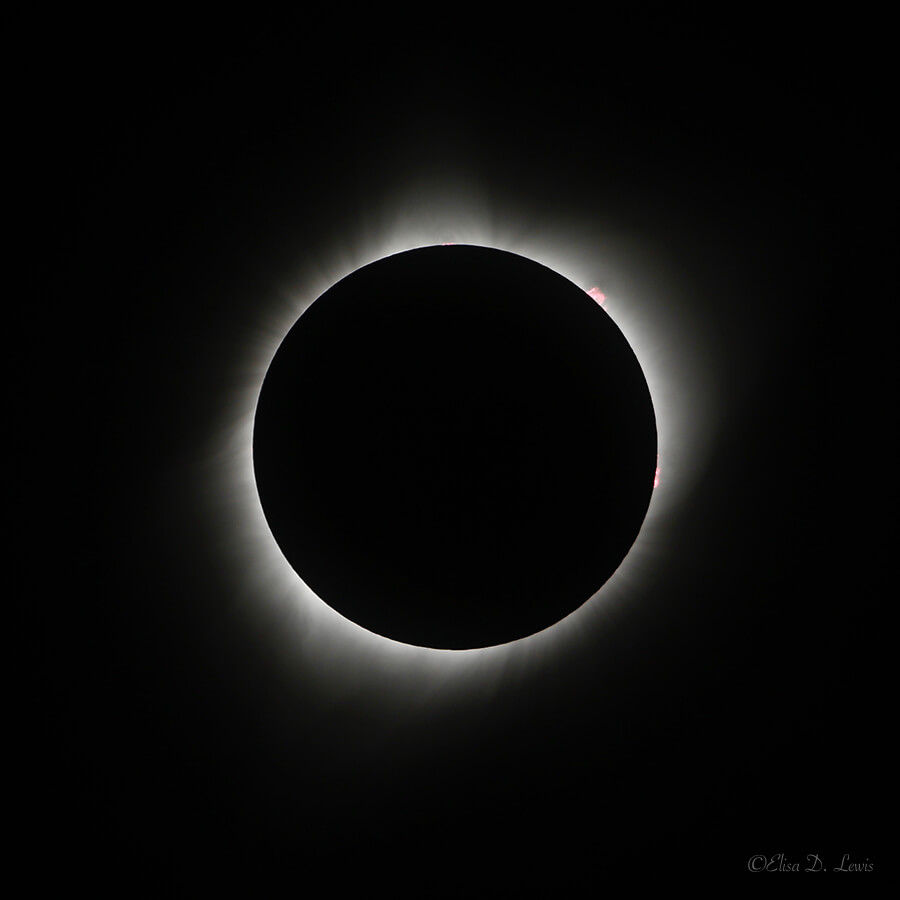
Totality, Casper, Wyoming
Totality, Casper, Wyoming. Elisa imaged the total solar eclipse on 8/21/17. Canon EOS 7DII/500mm f/4L/Thousand Oaks Optical metal foil solar filter/tripod/mirror-lock-up/cable release. Note the orange solar prominences. After sticking her toes in the astrophotography water, she is looking forward to the 11/9/19 transit of planet Mercury. Natural light.

Ducks are a bit weird. If you’ve ever scrutinized your reference books or field guides you may have noticed that sometimes the bright plumage of the drake is labeled “winter” and not “breeding.” This is because many species of drakes with brilliantly-colored plumage during most of the year molt into a relatively drab, female-like plumage called eclipse plumage during a short post-breeding period in summer. Their nearly year-round brilliance is briefly in eclipse.
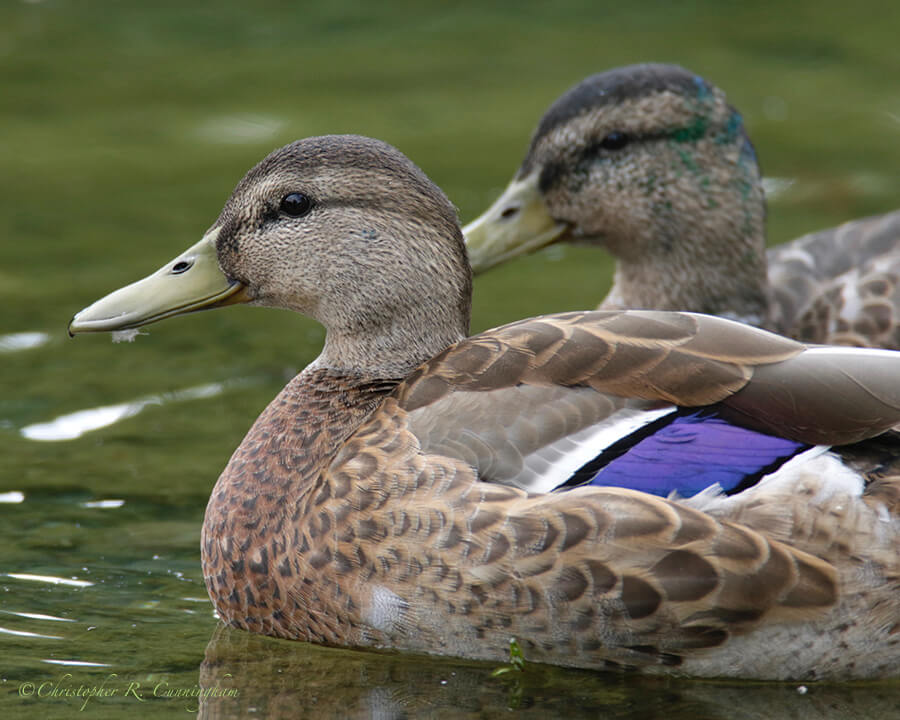
Mallards, Cheney Lake, Anchorage, Alaska
Mallard Drakes in Eclipse Plumage, Cheney Lake, Anchorage, Alaska. If you look closely you can see tiny flecks of green in the cheek area of the bird in the foreground. The drake behind is not as far along in process of molting into eclipse. Canon EOS 7DII/600mm f/4L IS (+1.4x TC). Natural light.

After our return from a recent Alaska trip, several birder friends from Texas asked what we had seen. Chris replied “Mallard drakes in eclipse plumage, for one.” The reaction was similar to the one he gets when someone asks why there are not astronomical eclipses all the time (“The plane of the moon’s orbit is inclined by 5 degrees to the plane of the ecliptic.”): bewildered stares.
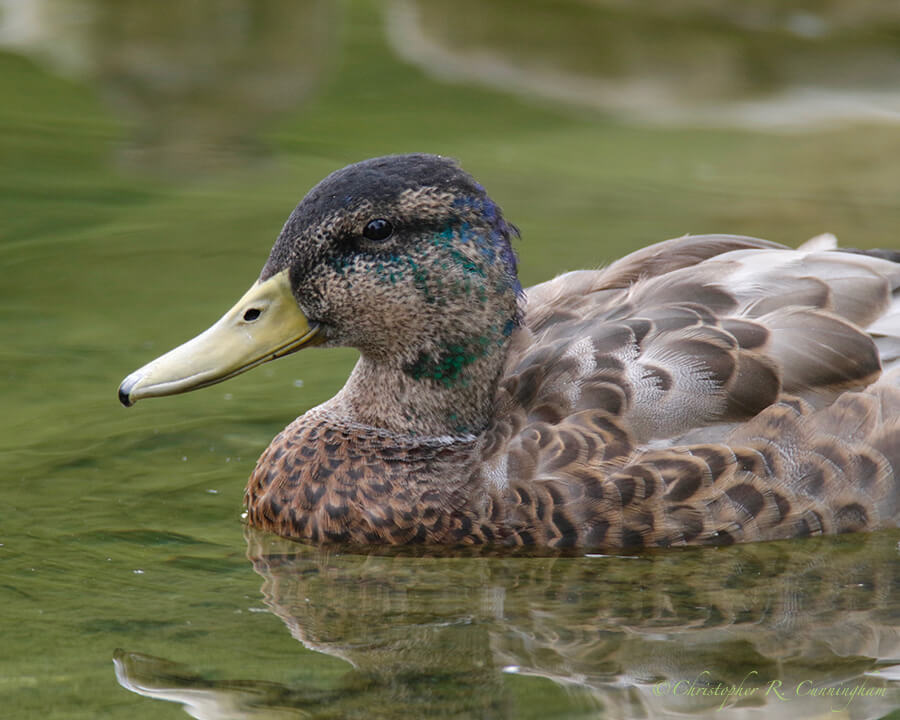
Mallard Drake Molting into Eclipse Plumage, Cheney Lake, Anchorage, Alaska
Mallard Drake Molting into Eclipse Plumage, Cheney Lake, Anchorage, Alaska. Canon EOS 7DII/600mm f/4L IS (+1.4x TC). Natural light.

This reaction is likely because only a handful of duck species breed in Texas, and more than half of these (Mottled Ducks and Fulvous and Black-bellied Whistling-Ducks) lack strong sexual dimorphism and a brilliantly colored drake. Only in Blue-winged Teal and Wood Ducks does the the possibility exist of seeing a drake noticeably in eclipse along the Upper Gulf Coast of Texas. In the case of the former, the casual birder would likely think he/she was looking at a hen. In the case of the latter, likely a juvenile or hen. Also, since none of these Texas duck species are typically a cause for excitement among birders, these drakes probably wouldn’t get a second look. In northern regions, where many duck species breed, an oft-asked question among those not clued-in to eclipse plumage is: “Where do all the beautiful drakes go in the summer.”
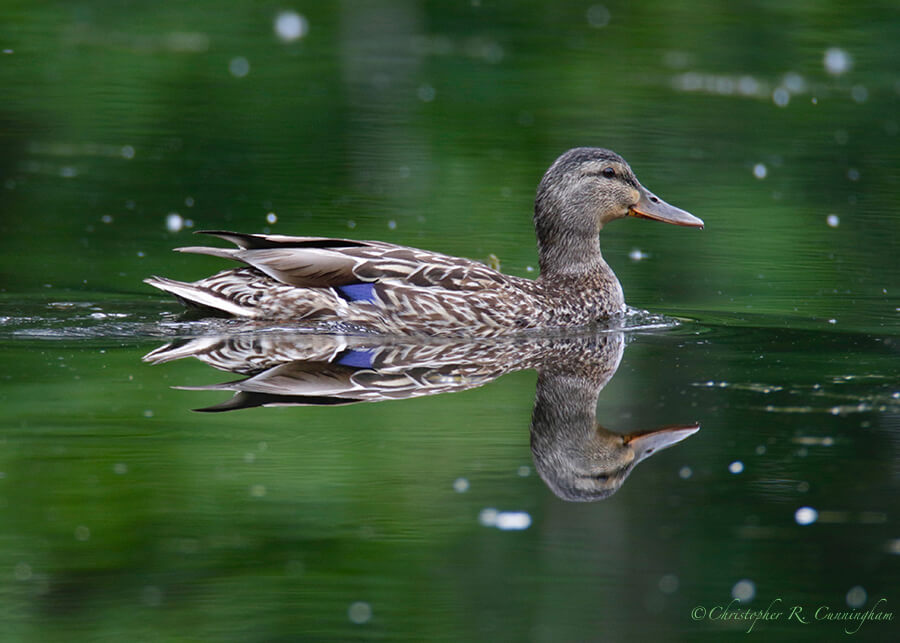
Mallard Hen, Cheney Lake, Anchorage, Alaska
Mallard Hen, Cheney Lake, Anchorage, Alaska. Note the orange bill. The “black saddle” is just coming in. Note that the cheek area is darker than that of the drake in eclipse. Mallard drakes have olive-yellow bills, too. Even in eclipse the drakes have showier rufous breast feathers. This bird also had ducklings in tow, helping with the identification. Canon EOS 7DII/600mm f/4L IS (+1.4x TC). Natural light.

What is the purpose of eclipse plumage? An adaptationist explanation is that after breeding the drakes no longer need the brilliant colors, so when they enter the molt for their primary (flight) feathers, they lose their showy colors, too. This makes sense ecologically in that when molting primaries they are unable to fly, so being more camouflaged like the females would be adaptive. The hens typically molt their primaries later in the summer, when the ducklings are quite independent.

Travel birding is a worthy endeavor because the insights you gain can be applied frequently at home. The next time I see drakes in the summer here in Texas, I’m sure to look a little harder at them. Maybe you will, too.
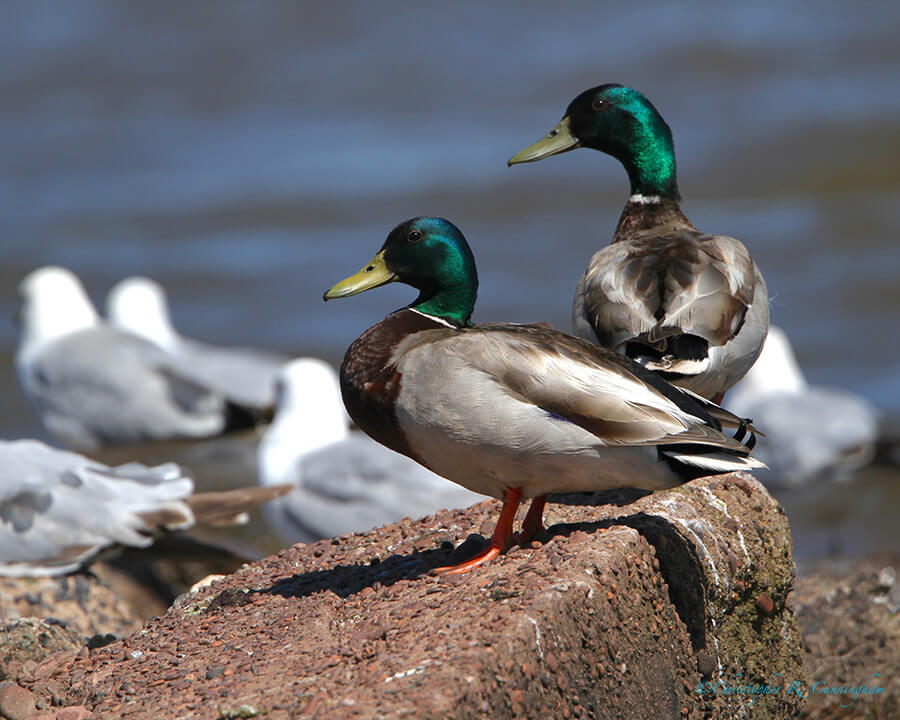
Mallard Drakes, Lake Superior, Wisconsin
Mallard Drakes in “Winter” Plumage–even though the photo was taken in June! South Shore, Lake Superior, Wisconsin. Canon EOS 7D/600mm f/4L IS (+1.4x TC). Natural light.

©2017 Elisa D. Lewis and Christopher R. Cunningham. All rights reserved. No text or images may be duplicated or distributed without permission.
Twoshutterbirds Takes a Break!

Sonny: Is there any special country you wanna go to?

Sal: Wyoming.

Sonny: Sal, Wyoming’s not a country.

–Dog Day Afternoon (1975)

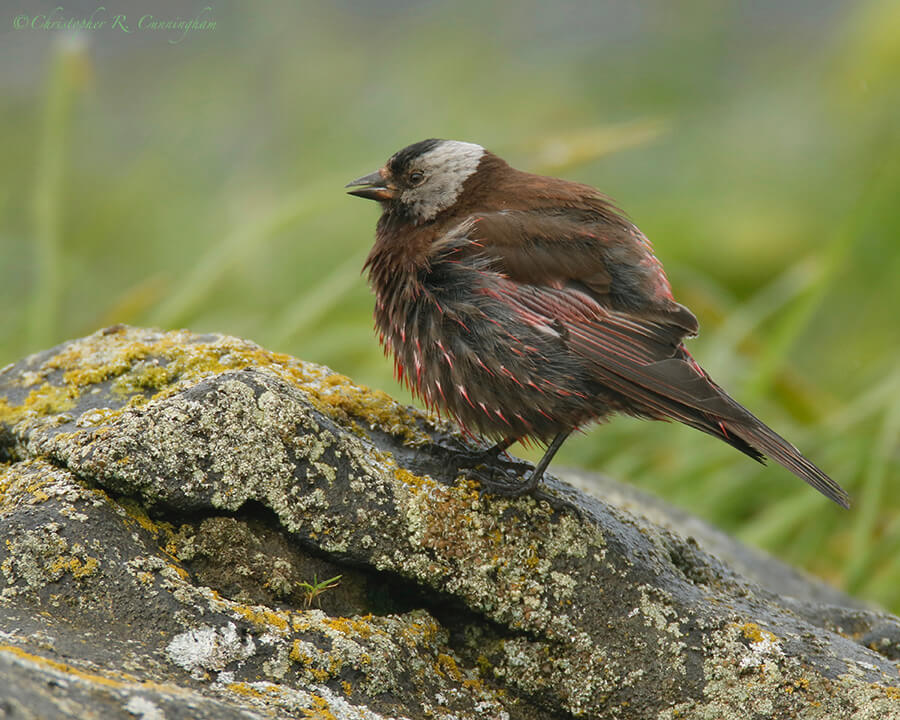
Gray-crowned Rosy-Finch, near Reef Rookery, St. Paul Island, Pribilof Islands, Alaska
35° F Bird: Gray-crowned Rosy-Finch (Pribilof subspecies, Leucosticte tephrocotis umbrina), near Reef Rookery, St. Paul Island, Pribilof Islands, Alaska. Only three songbird species are common on St. Paul in summer: Gray-crowned Rosy-finch, Lapland Longspur, and Snow Bunting. Canon EOS 7DII/600mm f/4L IS (+1.4x TC). Natural light.

What with Elisa up in Wyoming to observe the astronomical, and Chris back in thrall attending to the physical, we’re tapped out. Not to worry–we’ll be back on the ball soon with more images and prose celebrating our feathery friends. As we enter these sweaty dog days, we’re dreaming of the first blue norther (and northern and high places)! If you’re on the Texas Gulf Coast, we bet you are too!

©2017 Elisa D. Lewis and Christopher R. Cunningham. All rights reserved. No text or images may be duplicated or distributed without permission.
To Twitch or Not to Twitch

Twitchers are only interested in adding to the list of rare birds which they have seen. With their intelligence network, the[y] are ready to set out at the drop of a hat at any time of the day or night to travel large distances for the prospect of seeing a migrant lesser spotted scrub warbler, or whatever . . . .–Julie Fairless, Why are bird watchers called twitchers?

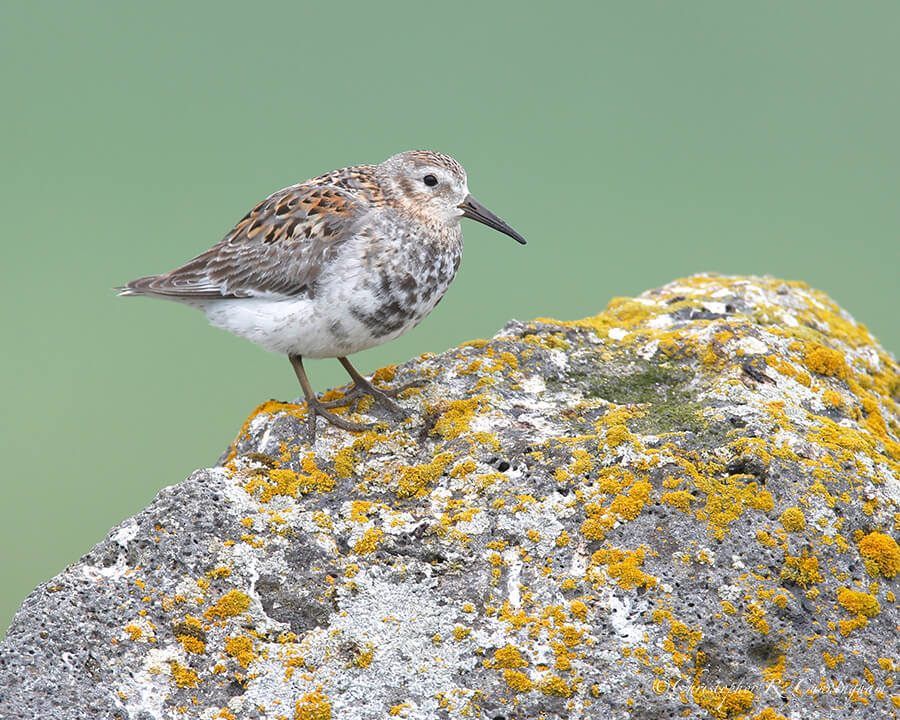
Rock Sandpiper, Black Diamond Hill, St. Paul Island, Pribilof Islands, Alaska
Rock Sandpiper, Black Diamond Hill, St. Paul Island, Pribilof Islands, Alaska. Guided visits to birding meccas often have a twitcher aspect. The network of local guides keep each other informed of where the birds are. The day after spending a delightful two hours photographing Lapland Longspurs, Snow Buntings, and Rock Sandpipers at Black Diamond Hill, I asked our leader to go back. He said that the birds weren’t there anymore. Canon EOS 5DIII/600mm f/4L IS (+1.4x TC). Natural light.

There are apparently many definitions (often tongue-in-cheek and with varying connotations) of twitching. There is even apparent disagreement as to whether the term is originally British or American. Most definitions reference traveling large distances to see rarities. Some twitcher definitions cite birds being blown off course, or otherwise being present well outside their normal ranges. Some reference that the activity is primarily to add to a list–not to seriously study or experience the bird the way a real bird watcher would. In many cases, the term is pejorative. Clearly twitching is many things to many people. There are probably as many definitions as there are birders (or bird watchers or twitchers). My definition: traveling (near or far) to see a bird or behavior (rare or common) that I have not (or rarely) seen before after receiving a tip.

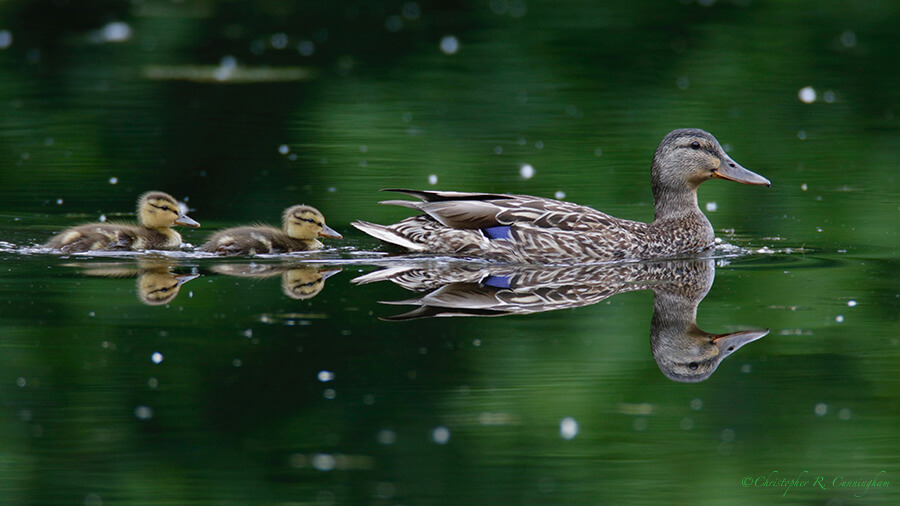
Mallard Hen with ducklings, Cheney Lake, Anchorage, Alaska
Mallard Hen with Ducklings, Cheney Lake, Anchorage, Alaska. I saw this ethereal scene on a twitch to see a Red-necked Grebe with young. The white spots are feathers floating on the surface of the water. The Mallard Drakes were molting from breeding into eclipse plumage (fodder for a future post!). Canon EOS 7DII/600mm f/4L IS (+1.4x TC). Natural light.

Experience, I think, will dictate whether a birder thinks twitching is worthwhile or not. After all, time, energy, and resources are very limited for most of us. While exciting, is time chasing oddities worth doing when you could be spending time at places that are nearly a sure thing?

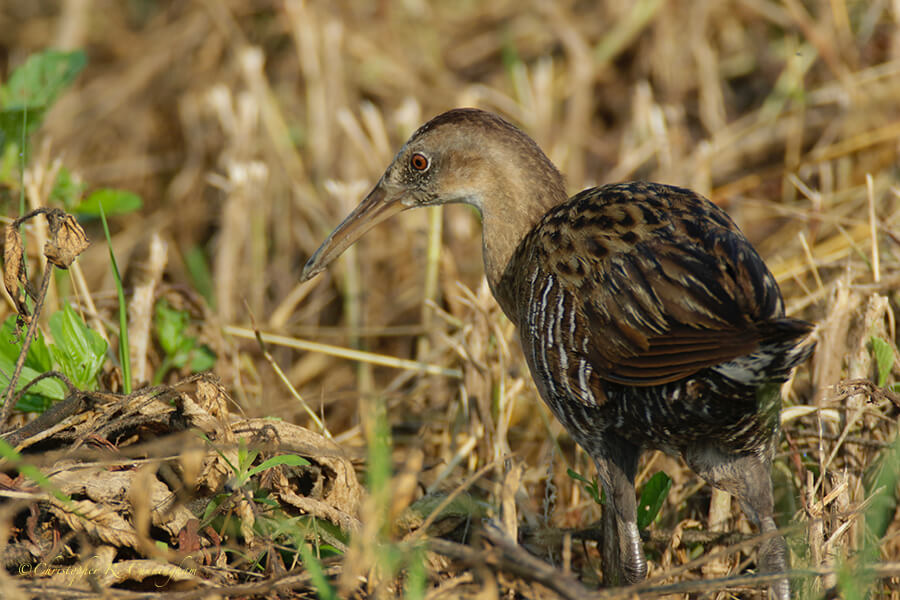
On a recent twitch to see a Jabiru Stork in agricultural fields north of Anahuac National Wildlife Refuge, the only bird of note we saw was a King Rail. This episode highlights many of the inherent problems in twitching. On a twitch you’re typically going to a new place. This means you don’t know the direction of the light or the details of the terrain or cover–so you don’t know which lens to have handy or where to park or where the birds are most likely to be. On this trip, I assumed that the Jabiru would be in an open field, probably with standing water, a long away. So I put my 2.0x teleconverter on the 600mm lens on the crop sensor body and had the big rig ready to go behind the seat.

In the general area where the stork had been seen, a line of cars was already parked. After parking, I started walking down the road surveying the fields with my binoculars. Once several hundred yards from our vehicle I came across another birder who pointed out the King Rail no more than three yards away from the side of the road in a drainage ditch! After hustling back to the truck, I drove back, pulled out the handiest (but way too big!) lens, got off a few (miserable) shots before the bird disappeared forever into the brush.

It’s a hard-learned lesson, and one I should have learned a long time ago: Always have a camera with you in the field! Even if it’s hot and schlepping it around is awkward and annoying! Had I brought a second body with a modest and versatile lens (like a 100-400mm zoom), I wouldn’t have been kicking myself for the past week!

KIng Rail, near Anahuac National Wildlife Refuge, Texas
Object Lesson: King Rail, near Anahuac National Wildlife Refuge, Texas. This bird was spotted on a twitch to see a Jabiru Stork. Easily confused with the much more common Clapper Rail, the slightly larger King Rail can be identified by the brown stripe down the back of the neck. King Rails inhabit freshwater environments and Clapper Rails (except the Yuma subspecies) inhabit brackish and marine marshes. But . . . salinity is a continuum along the coast, and Clappers and King Rails interbreed where their ranges overlap. Canon EOS 7DII/600mm f/4L IS (+2.0x TC) (unfortunately). Natural light.

©2017 Christopher R. Cunningham. All rights reserved. No text or images may be duplicated or distributed without permission.
An Early Morning Walk in the (Fiorenza) Park

All around, people looking half dead
Walking on the sidewalk, hotter than a match head . . . .–Summer in the City, Lovin’ Spoonful

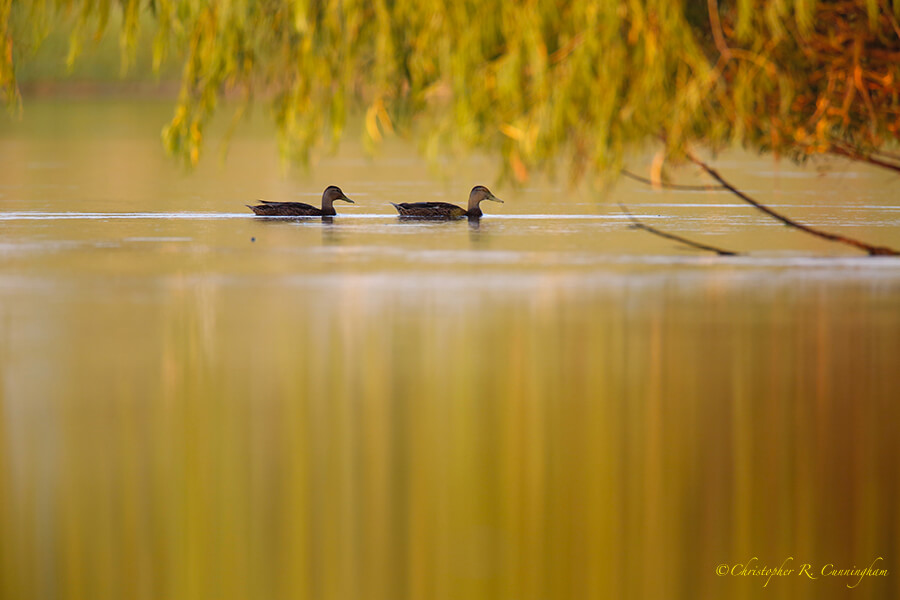
The Golden Hour, Fiorenza Park, West Houston. Canon EOS 5DIII/600mm f/4L IS (+1.4x TC). Natural light.
The Golden Hour, Fiorenza Park, west Houston. An inconspicuous red-eared turtle spies on two Mottled Ducks as they glide past. Canon EOS 5DIII/600mm f/4L IS (+1.4x TC). If you arrive around 7 AM, you can watch the edge of illuminated water slowly track across the lake. Photo taken from ground pod. Natural light.

It’s taken about two weeks to get back into the field after our return from Alaska. After living two weeks around 38º F, the prospect of being out when it’s near 38º C hasn’t sounded too inviting. But this week I took advantage of a so-called “cold front” and visited Fiorenza Park in west Houston. While trying to photograph fishing cormorants and waders from my ground pod by the bridge, a fellow traveler (JD) told me that a Bald Eagle was perched on a snag on the other side of the park. Ultimately I saw no eagle, but while walking to the snag I came upon a family of Loggerhead Shrikes–two young and a parent.

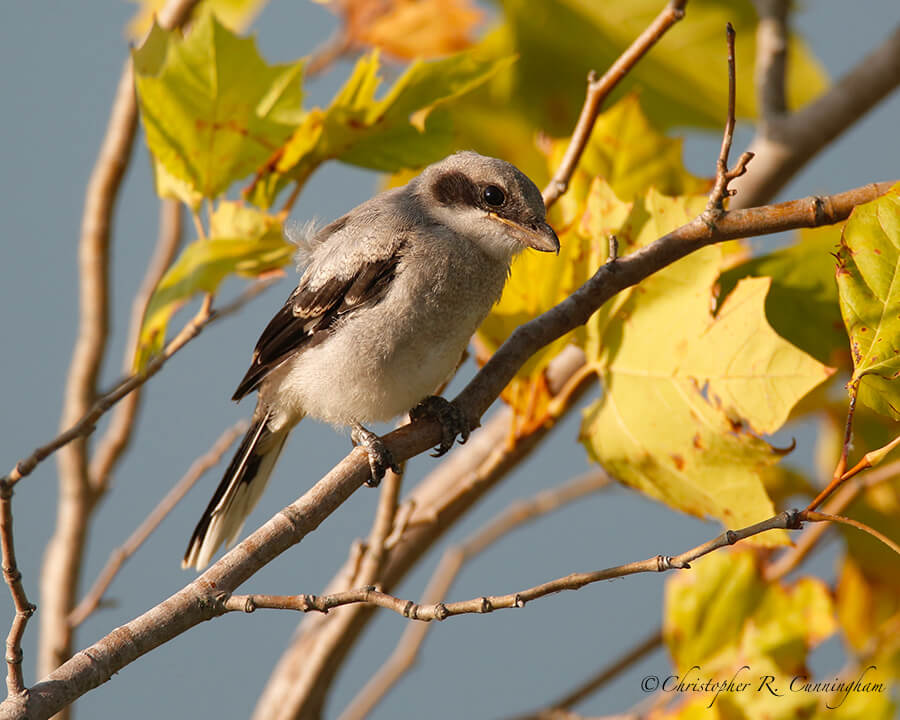
Loggerhead Shrike Fledgling, Firoenza Park, west Houston, Texas
Loggerhead Shrike Fledgling on Sycamore Sapling, Fiorenza Park, west Houston, Texas. Canon EOS 5DIII/600mm f/4L IS (+1.4x TC). Natural light.
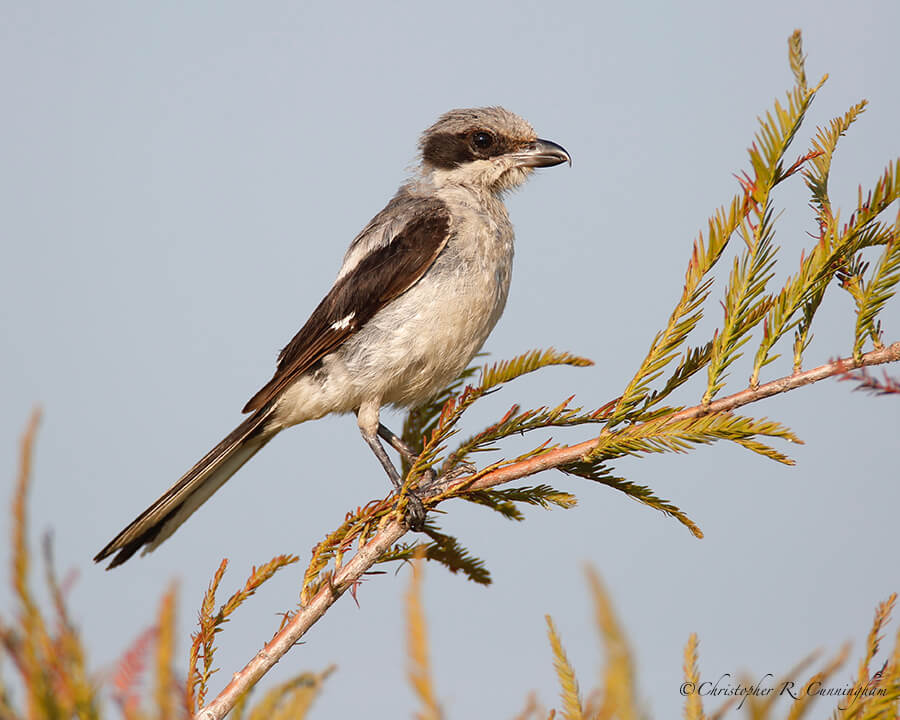
Adult Loggerhead Shrike on Cypress Tree, Fiorenza Park, west Houston, Texas
Adult Loggerhead Shrike on Cypress Sapling, Fiorenza Park, west Houston, Texas. Canon EOS 5DIII/600mm f/4L IS (+1.4x TC). Natural light.

Luckily, I was able to observe the adult hunting insects in the grass as well as begging and feeding behaviors. On this visit, I found the colors of the trees, especially the small ones, to be quite rich and beautiful–almost autumn-like. Of course, the rich colors are the result of heat stress, and these small trees have begun the slow process of being baked to death under a brutal Texas sun. But, the return of rains mid-week may have ended the dying time for this summer . . . .

Adult Loggerhead Shrike Feeding Fledgling, Firoenza Park, west Houston, Texas
Adult Loggerhead Shrike with Begging Fledgling on Heat-stressed Cedar Elm(?), Fiorenza Park, west Houston, Texas. Canon EOS 5DIII/600mm f/4L IS (+1.4x TC). Natural light.
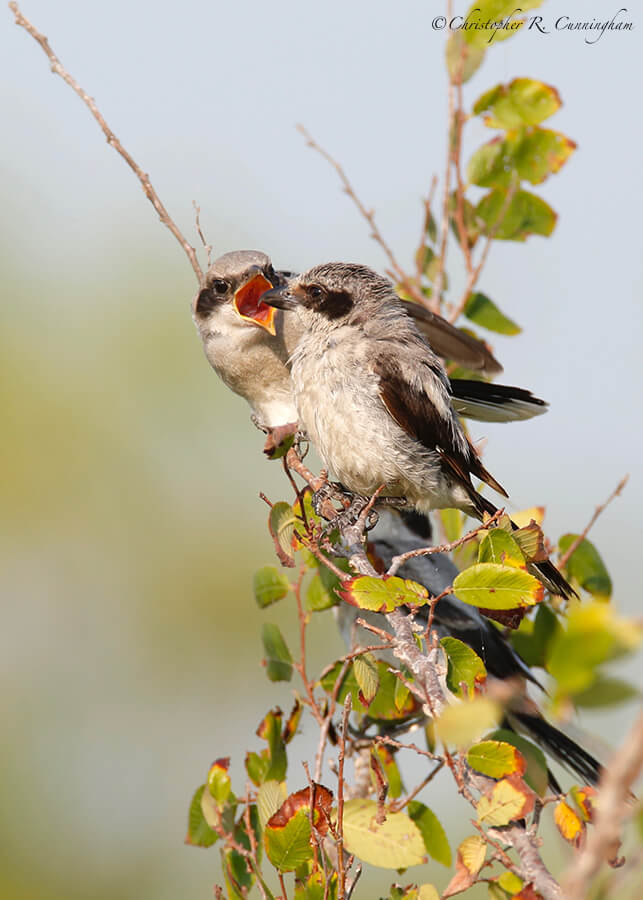
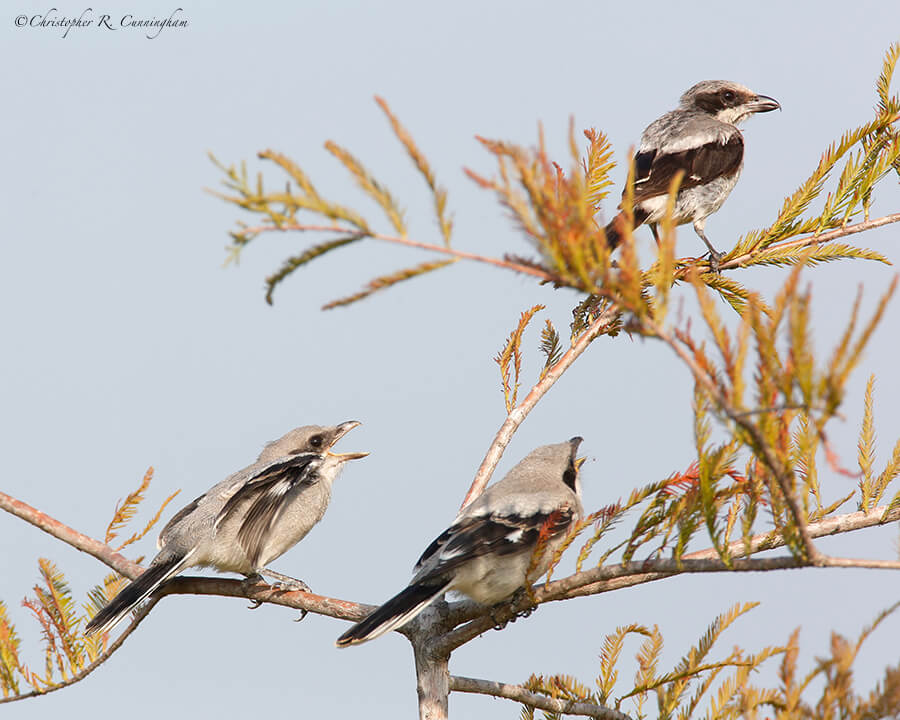
A Pair of Begging Loggerhead Shrike Fledglings with Parent, Fiorenza Park, west Houston, Texas
A Pair of Begging Loggerhead Shrike Fledglings with Parent, Fiorenza Park, west Houston, Texas. Canon EOS 5DIII/600mm f/4L IS (+1.4x TC), Natural light.

©2017 Christopher R. Cunningham. All rights reserved. No text or images may be duplicated or distributed without permission.