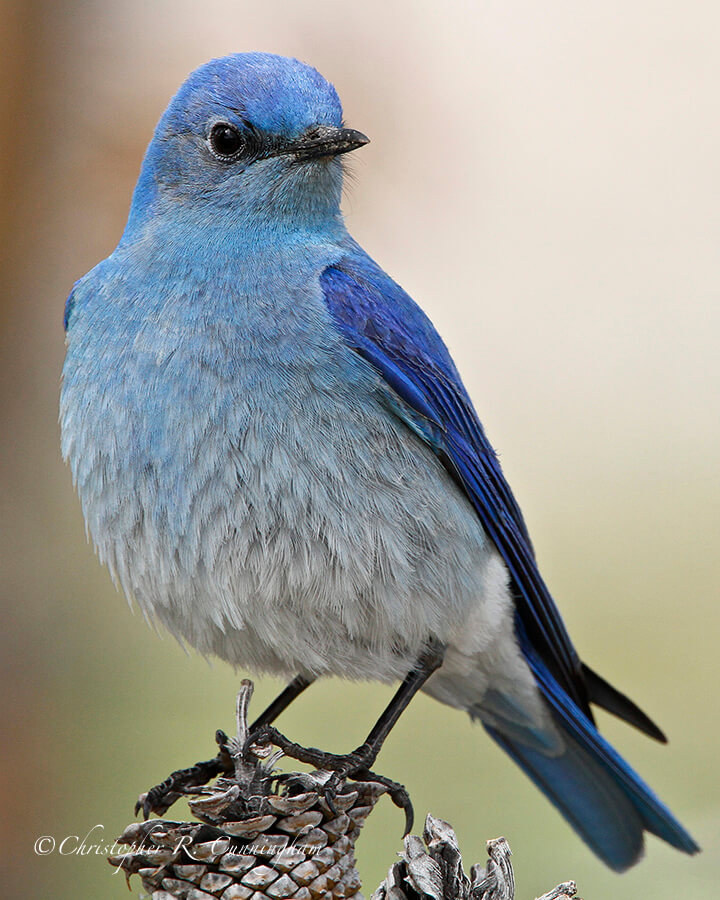
The Bluebird of Happiness Takes a Vacation

The Bluebird of Happiness on Vacation, Male Mountain Bluebird, Yellowstone National Park, Wyoming.
The Bluebird of Happiness on Vacation, Male Mountain Bluebird, Yellowstone National Park, Wyoming. The Bluebird of Happiness has left Texas. Canon EOS 7D/500mm f/4L IS (+1.4x TC). Natural light.

For all our birding friends . . . .

This week’s post will be somewhat abbreviated as last week my father, Duane, passed away after a long illness, and Elisa and I spent three days with family in Minnesota. We have been thinking of him and remembering the happy times, the times outside. It was he who taught me photography, and from whom I gained my first appreciation of nature. So, if you have enjoyed this blog over the years, then you have, in some measure, him to thank. I will miss him.

Shortly after our return to Texas, the atmosphere decided to dump a foot of rain on west Houston, flooding our neighborhood and house (sidebar: we understand that the rain was so heavy in Fort Bend County that Brazos Bend State Park will be closed indefinitely). It will be some time before we claw our way out from the chaos, but there are signs of progress. The insurance adjuster is on the calendar, the floors are drying, and so on.

We have decided to take the flood as a positive, and to further pare down the detritus that stuffs our house. I guess this forces us to remodel! In any case, we are trying to regain our sense of humor and soldier on!

The light shines in the darkness, and the darkness has not overcome it.

John 1: 5

©2015 Christopher R. Cunningham. All rights reserved. No text or images may be duplicated or distributed without permission.
Birds: Sleeping with One Eye Open

Sleeping is no mean art: for its sake one must stay awake all day.–Friedrich Nietzsche

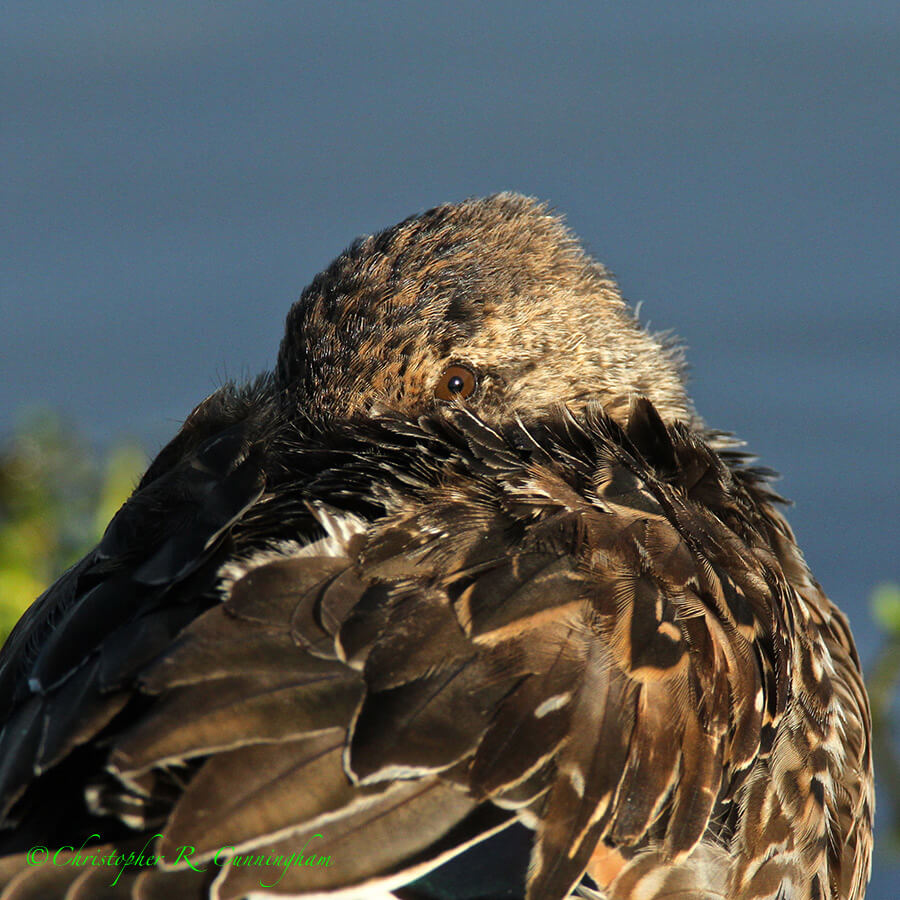
Green-wing Teal, Leonabelle Turnbull Birding Center, Port Aransas, Texas
Green-winged Teal Hen, Leonabelle Turnbull Birding Center, Port Aransas, Mustang Island, Texas. Late fall. Canon EOS 7D/600mm f/4L IS (+1.4x TC). Natural light.

Birds live in a dangerous world. Never is this more evident than when they are trying to sleep. Ground-roosting birds like waterfowl, shorebirds, and gulls can often be seen drifting in and out of sleep, one eye open, intermittently surveying the environment for dangers (and photographers).

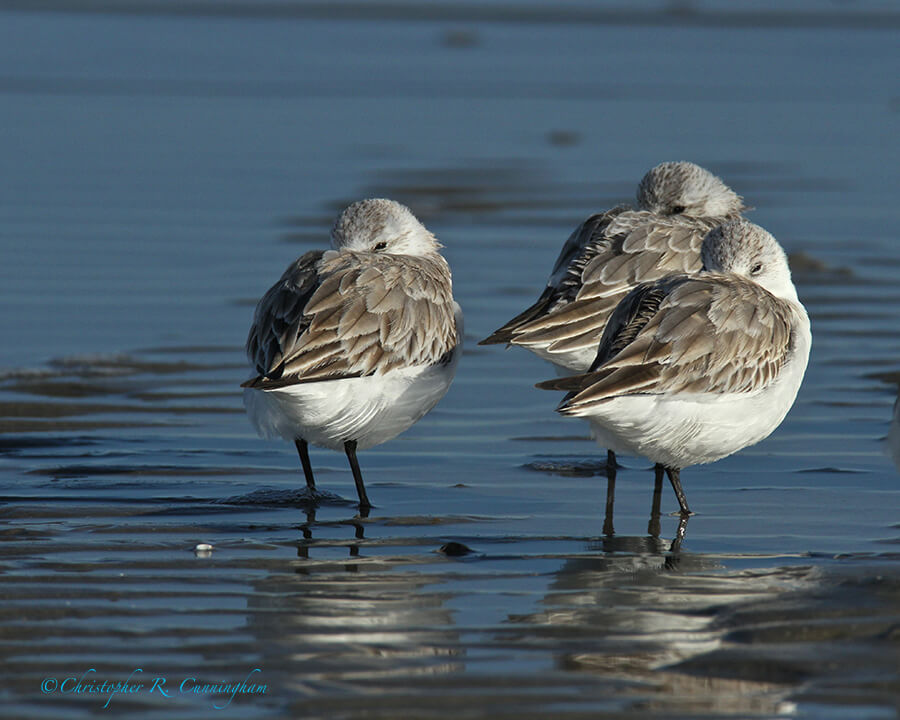
Sleeping Sanderlings, East Beach, Galveston Island, Texas
Sleeping Sanderlings (Nonbreeding), East Beach, Galveston Island, Texas. Note the beautiful ripple marks. Late winter. Canon EOS 7D/600mm f/4L IS (+1.4x TC). Natural light.
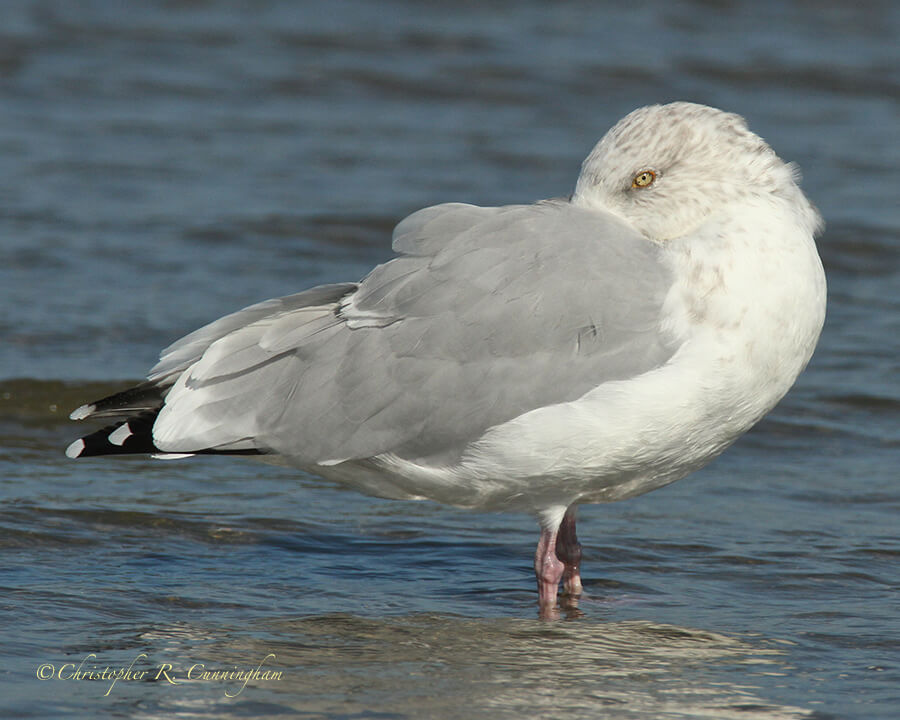
Herring Gull in Sleeping Position, East Beach, Galveston Island, Texas
Herring Gull (Nonbreeding) in Sleeping Position, East Beach, Galveston Island, Texas. Late winter. Canon EOS 7D/600mm f/4L IS (+1.4x TC). Natural light.

Many birds sleep (or merely rest) with their heads supported on their backs, beaks nestled in the scapulars. This rests the muscles of the neck and keeps the delicate skin around the beak warm. Breath expelled into the feathers keeps the back nice and toasty warm. On some cold and windy days, it’s common to see sandpipers balanced on one leg (like the Sanderling on the right above). This, of course, reduces the amount of bare skin exposed to the hostilities of the environment.

Soon Texas birds will be much more concerned about keeping cool—and I’ll keep an eye out to document their interesting thermoregulatory behaviors!

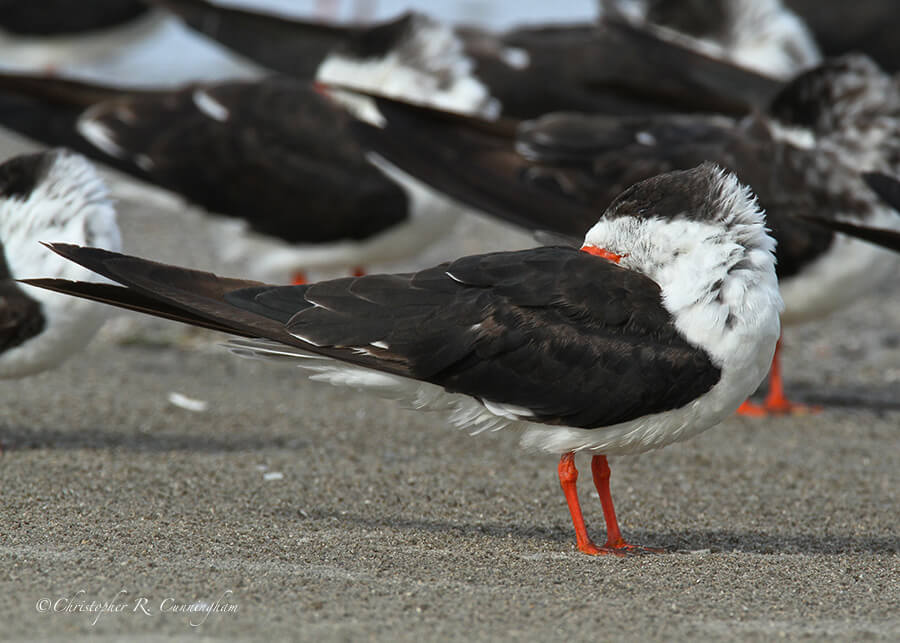
Sleeping Black Skimmer, East Beach, Galveston Island, Texas
Sleeping Black Skimmer, East Beach, Galveston Island, Texas. Late fall. Canon EOS 7D/600mm f/4L IS (+1.4x TC). High-speed synchronized fill-flash.

©2015 Christopher R. Cunningham. All rights reserved. No text or images may be duplicated or distributed without permission.
Spring Migration 2015 Tapers Off

And I, what fountain of fire am I among
This leaping combustion of spring? My spirit is tossed
About like a shadow buffeted in the throng
Of flames, a shadow that’s gone astray, and is lost.

—Enkindled Spring, D.H. Lawrence

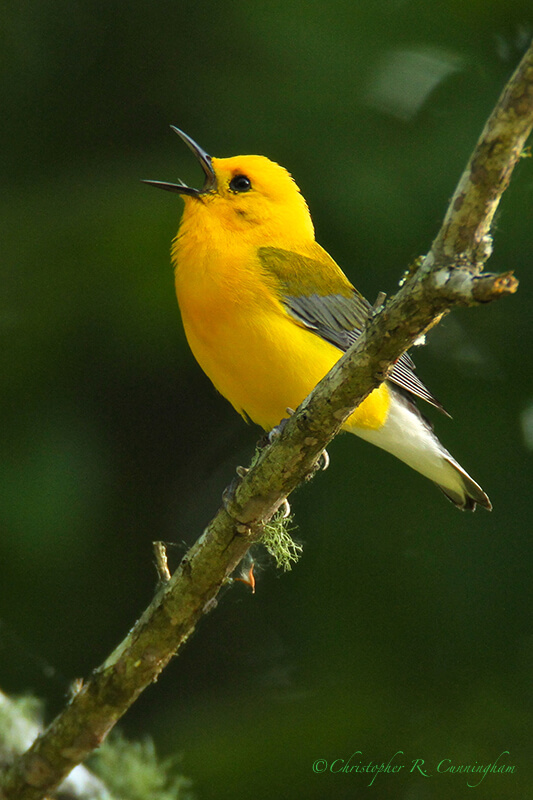
Singing Golden Swamp Warbler, Brazos Bend State Park, Texas
Tsveet tsveet tsveet . . . Singing Male Golden Swamp Warbler, Brazos Bend State Park, Texas. This fellow is nesting in Nest Box 24. Canon EOS 7D/600mm f/4L IS (+1.4x TC). Natural light.

The primaveral combustion of brilliantly colored Neotropical migrant songbirds and shorebirds molting into breeding plumage is giving way to the vernal, thermal Texas combustion. But every spring migration is a bit different. It seems that we saw less than last year, and certainly far less than the previous one—but not for want of trying. And I’ve got the bites, scratches, and poison ivy blisters to prove it.

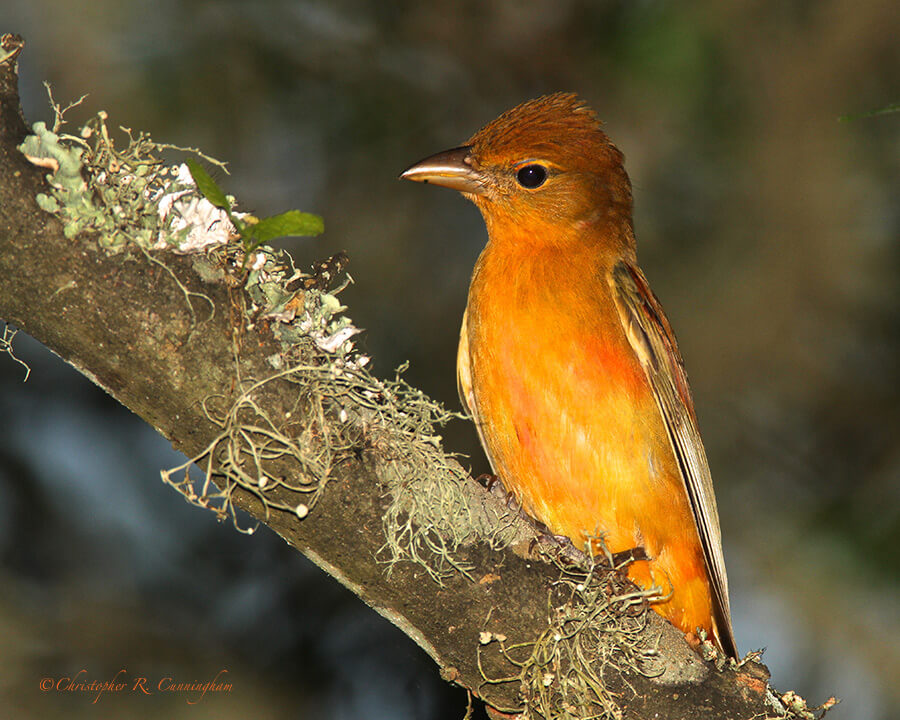
Immature Male Summer Tanager, Lafitte's Cove, Galveston Island, Texas
Immature Male Summer Tanager, Lafitte’s Cove, Galveston Island, Texas. Canon EOS 7D/600mm f/4L IS (+1.4x TC). High-speed synchronized fill-flash.

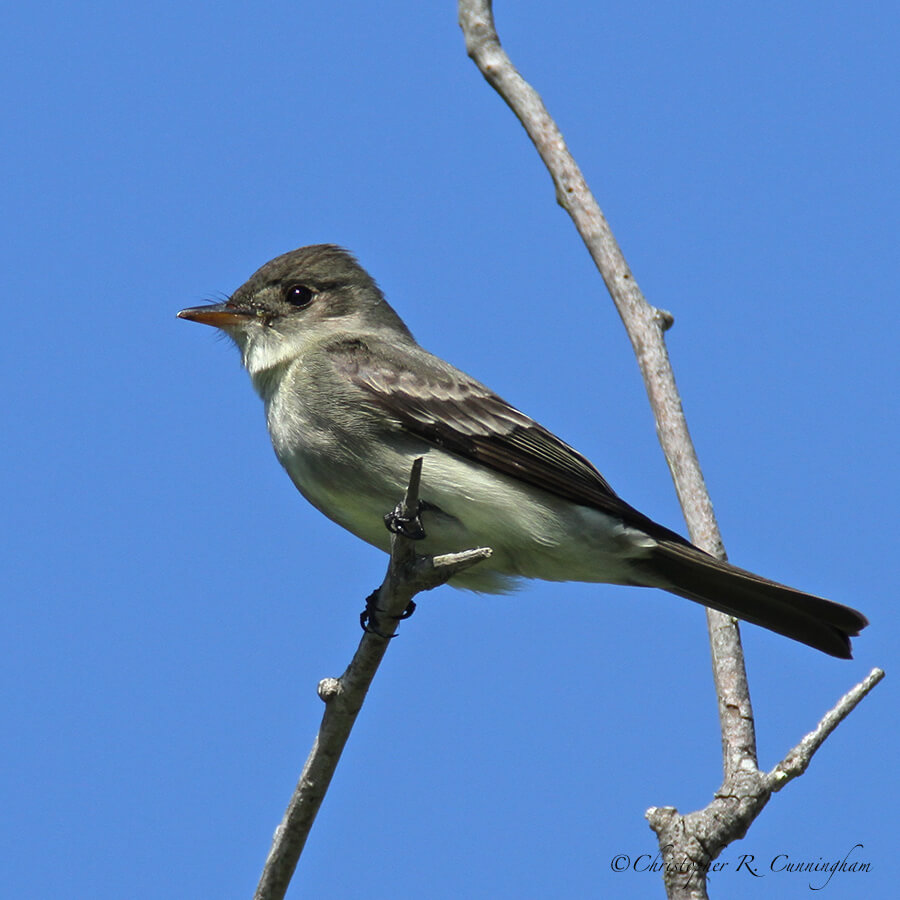
This was the year of seeing Tanagers (Summer and Scarlet), Eastern Wood-pewees, and Bay-breasted Warblers. Of the Pewees, we heard even more than we saw. Everywhere we went in April and May the pee-ah-wee or wee-ooo could be heard. But luck would have it that we saw far fewer warblers and other songbirds than usual—no swarms of Hooded, Yellow, or Magnolia Warblers, just the odd bird here and there poking around in the woods.

Eastern Wood-pewee at Lafitte's Cove, Galveston Island, Texas
Eastern Wood-pewee at Lafitte’s Cove, Galveston Island, Texas. Many flycatchers are like peas in a pod, but Eastern Wood-pewees can be identified by their weak, partial posterior eye-ring, two weak wing bars, and yellow lower beak. Eastern Canon EOS 7D/600mm f/4L IS (+1.4x TC). High-speed synchronized fill-flash.

So, as the migration tapers off, it’s time to transition into summer birding mode. My time and mind will soon be filled by planning for the upcoming big birding trips (Yea, mountains!) and stalking waders around the swamps and marshes as they hunt and fish their way through the broiling Texas summer.

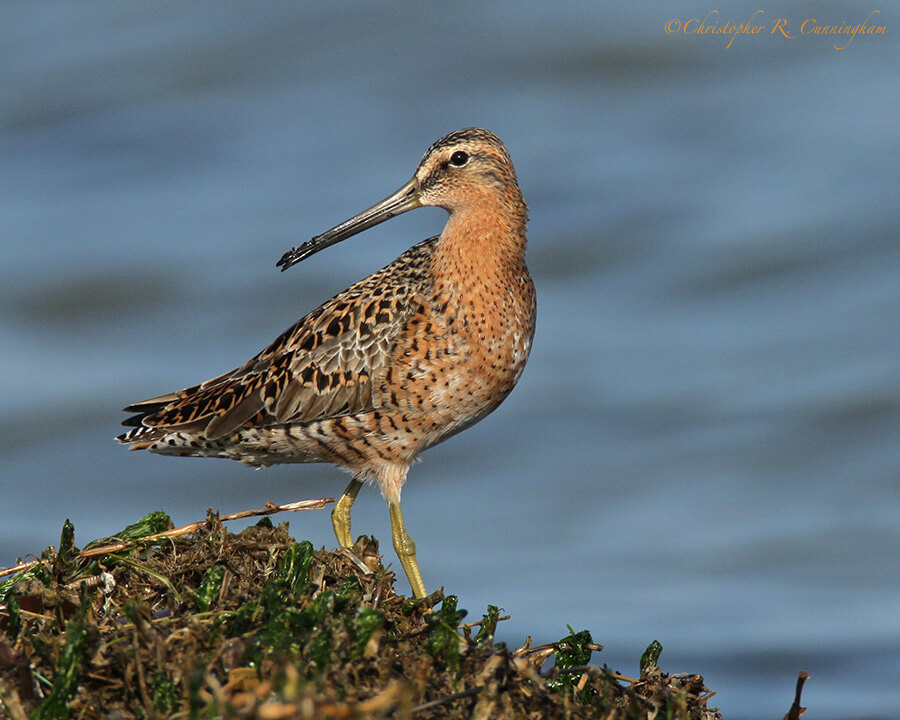
Short-billed Dowitcher, East Beach, Galveston Island, Texas
Short-billed Dowitcher, East Beach, Galveston Island, Texas. Short-billed Dowitchers winter along the Texas Gulf Coast and breed across Canada and Alaska at the latitude of Hudson Bay. Short-billed Dowitchers and Long-billed Dowitchers are very hard to tell apart. In breeding plumage, Short-bills are orangish and Long-bills are brick-reddish, but light can play tricks. I always measure the proportions of the bird’s head in my images to be sure. Canon EOS 7D/600mm f/4L IS (+1.4x TC). Natural light.

©2015 Christopher R. Cunningham. All rights reserved. No text or images may be duplicated or distributed without permission.
American Avocet Courtship and Mating, East Beach, Galveston Island, Texas

 Shall I compare thee to a summer’s day?
Thou art more lovely and more temperate:
Rough winds do shake the darling buds of May . . . . –William Shakespeare

Last weekend the weather was spectacular, and Elisa and I took full advantage. East Beach, Galveston Island, Texas was our first stop of the weekend. We were surprised to find a large flock (100+) of American Avocets, mostly in breeding color (rusty-red/cinnamon head, neck, and breast) in the main lagoon just south of the parking area.

The main breeding range of the American Avocet is from the Texas Panhandle to south-central Canada, west to the Pacific Coast. American Avocets also breed along the South Texas Gulf Coast. There is a wintering population of Avocets all along the Gulf Coast, but we don’t typically see them in breeding colors this far north.

As we watched the ruddy-faced flock, we soon we noticed that some pairs were engaged in their charming and elegant courtship and mating behaviors. All images in this post taken with a Canon EOS 7D/600mm f/4L IS (+1.4x TC) under natural light.

Mating American Avocets 1: The Female Presents
Mating American Avocets 1: The Female Presents.

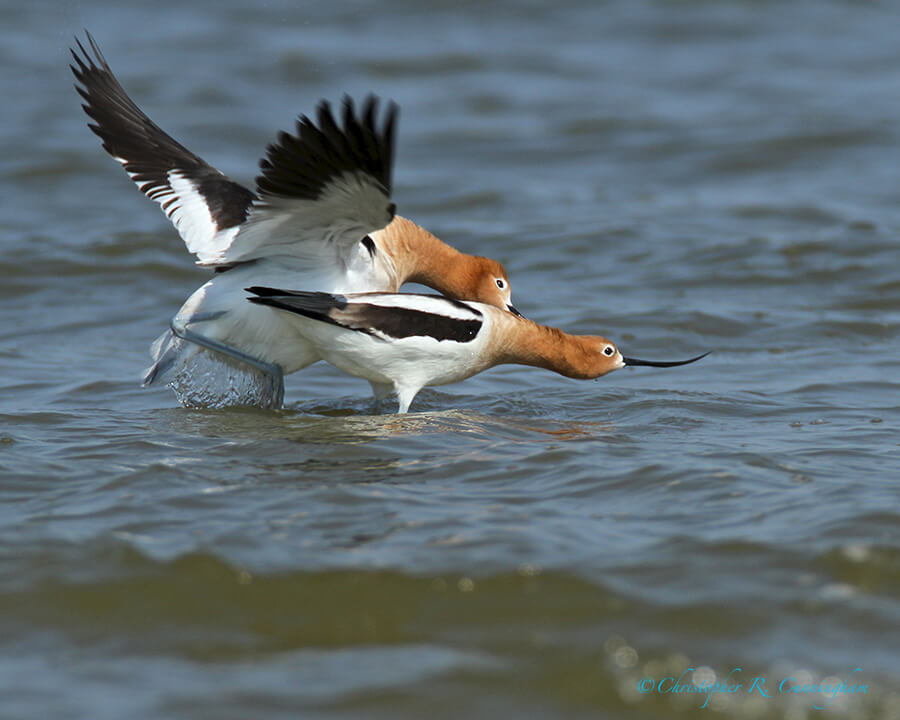
After photographing birds in the lagoon for a time, I walked south along the strand line of the Gulf. On the return hike, about a dozen Avocets flew from the lagoon and landed right in front of me in a few inches of Gulf water. One pair began courtship behavior almost immediately, as shown in this sequence of images. First, the female presented herself to the flapping and splashing male by holding her body parallel to the ground.

Mating American Avocets 2: Mounting
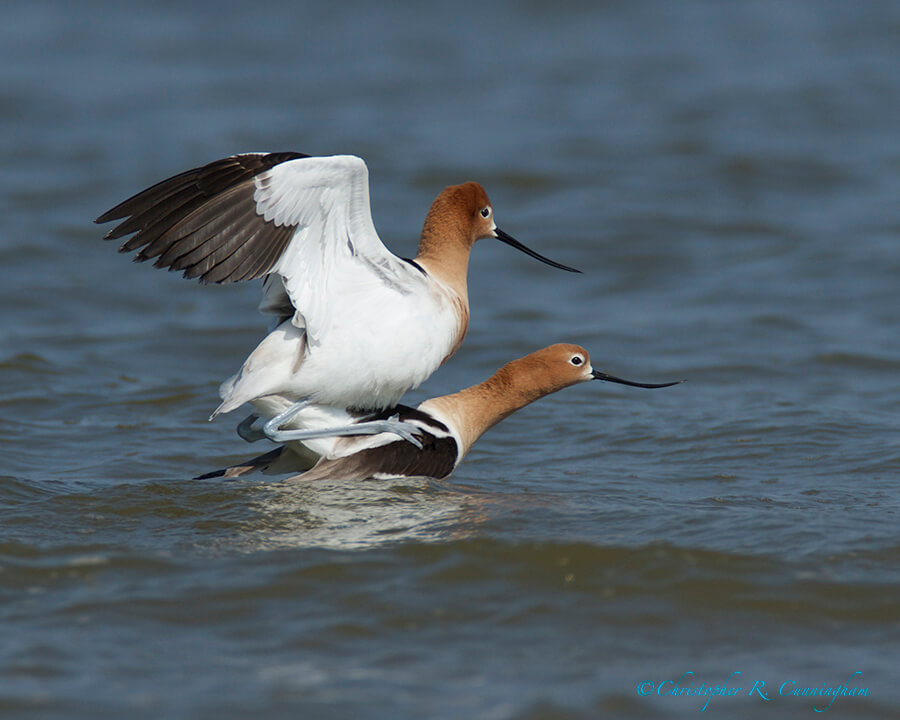
Mating American Avocets 2: Mounting. Note the more strongly upturned beak of the female.

The male soon mounted the female and copulation began. In about a minute, the act was complete, and the elegant post-mating dance began . . . .

Mating American Avocets 3: Interplay of Beaks
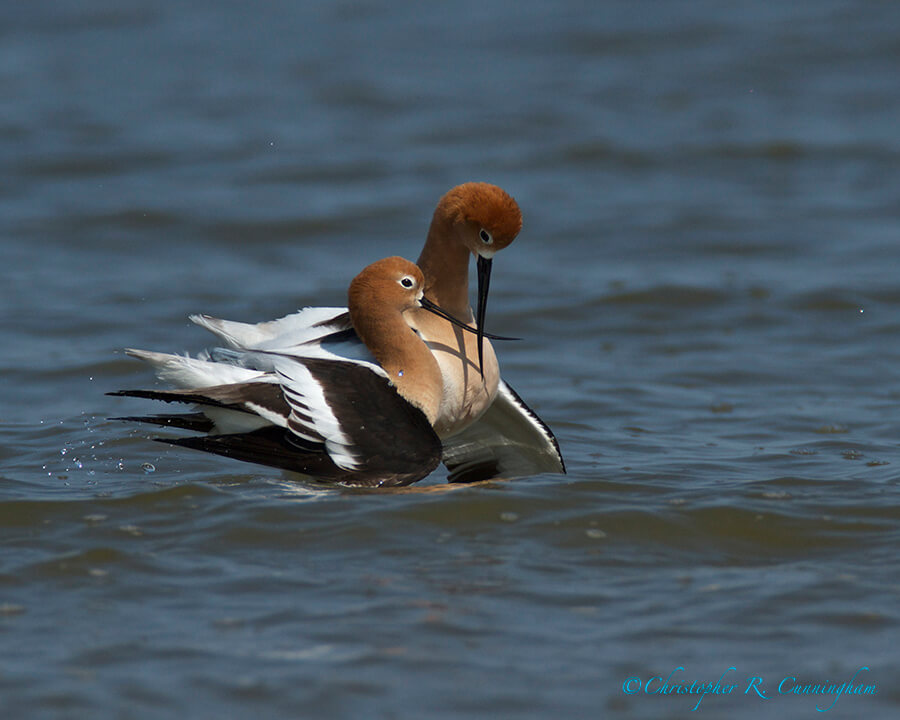
Mating American Avocets 3: Interplay of Beaks.

The pair crossed beaks as they walked along together. They then separated bills and walked together side-by-side, necks strongly inclined forward.

Mating American Avocets 5
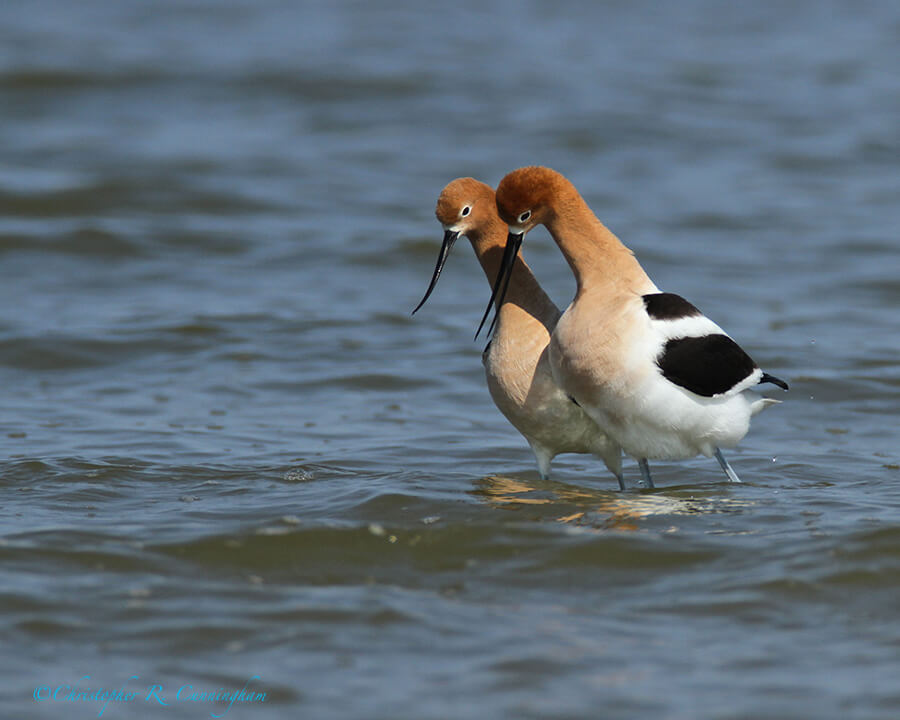
Mating American Avocets 4: Leaning Forward.

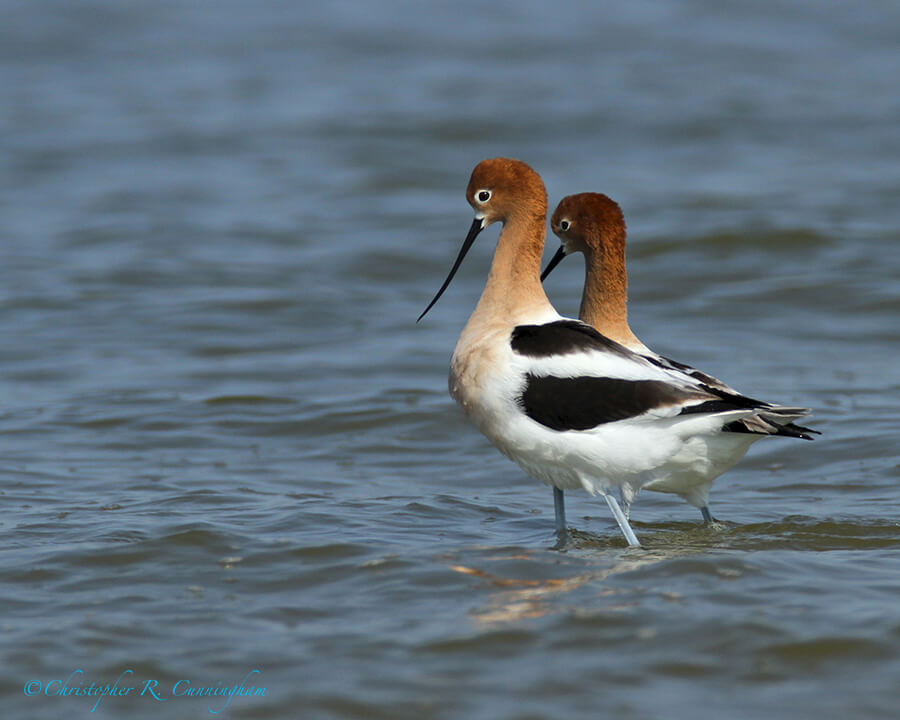
After a few seconds, the birds rotated their necks into a vertical position, with bills pointed strongly downward. The pair walked along together in this posture for a few paces. Necks became more vertical as the pair promenaded along together for a few paces, then separated. Soon, they were again threshing the water for prey.

Mating American Avocets 5: Elegant Promenade
Mating American Avocets 5: Elegant Promenade.

©2015 Christopher R. Cunningham. All rights reserved. No text or images may be duplicated or distributed without permission.
A Green Heron in Full Breeding Glory

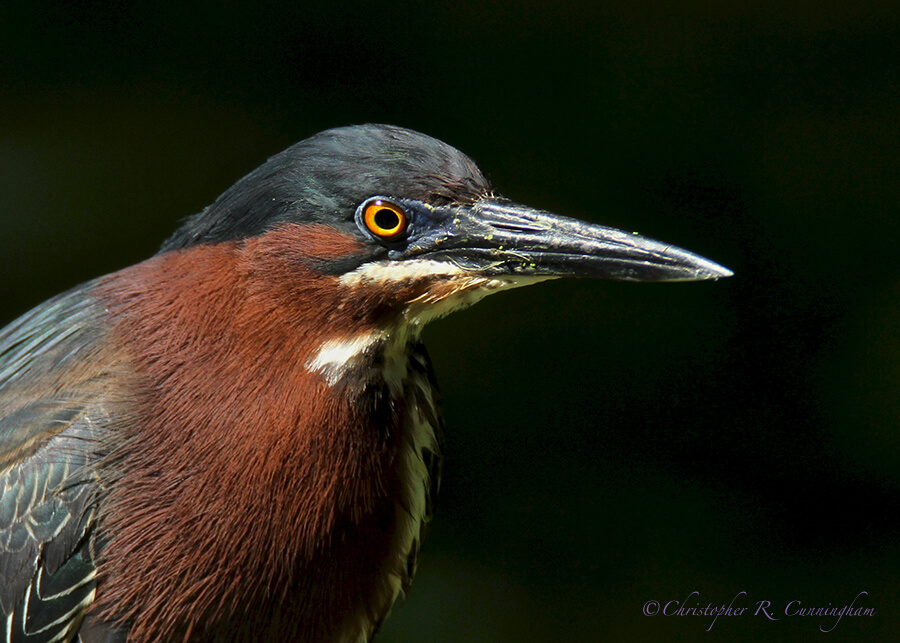
Portrait: Green Heron in Full Breeding Plumage, Pilant Lake, Brazos Bend State Park, Texas
Portrait: Green Heron in Full Breeding Plumage, Pilant Lake, Brazos Bend State Park, Texas. Note the brilliant violet-blue lore. Canon EOS 7D/600mm f/4L IS (+1.4x TC). Natural light.

Last weekend we managed to get out to Brazos Bend State Park during a sunbreak. Along the southern margin of Pilant Lake, between Elm Lake and the bridge, we noticed a pair of Green Herons fishing. Both were adult birds, but were in different stages of development of breeding colors. One (shown above and immediately below) was in full breeding color. The other was just shy of full development.

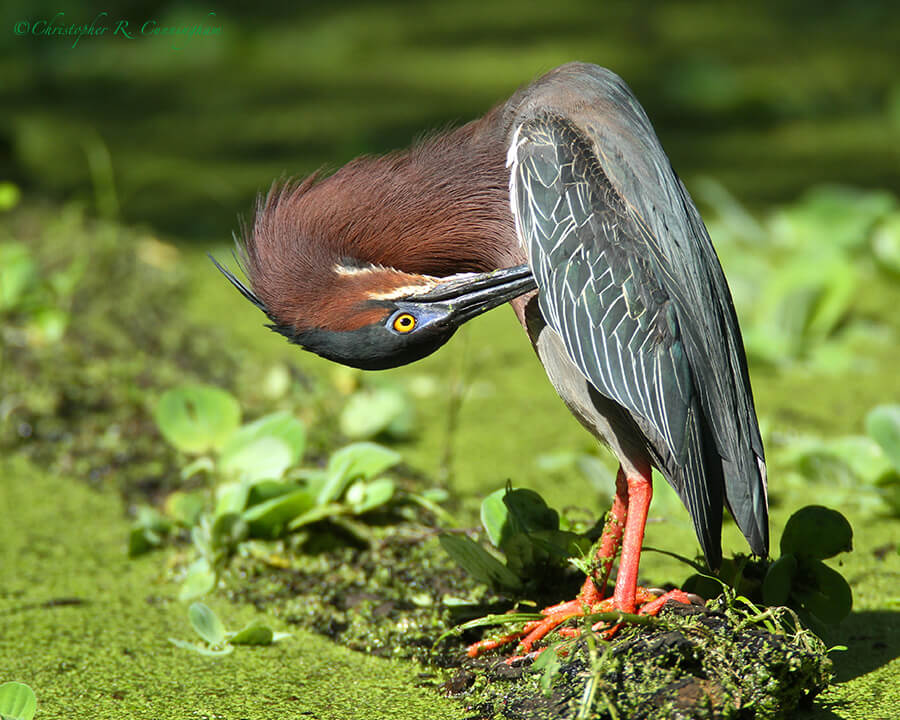
Preening Green Heron in full breeding plumage, Pilant Lake, Brazos Bend State Park, Texas.
Preening Green Heron in Full Breeding Plumage, Pilant Lake, Brazos Bend State Park, Texas. When you’re this good-looking, it’s important to take care of yourself! Note the “glossy orange” feet and legs. Canon EOS 7D/600mm f/4L IS (+1.4x TC). Natural light.

These birds buzzed each other a few times and generally acted as though they were squabbling. This may have been an aspect of courtship behavior or a territorial dispute. Based on the benign nature of the interactions, it seemed more likely to be the former. The bird in full breeding had brilliant violet-blue lores without a trace of yellow, and the feet were a bright orange. The beak was, more or less, a glossy jet-black. This bird is likely involved in courtship.

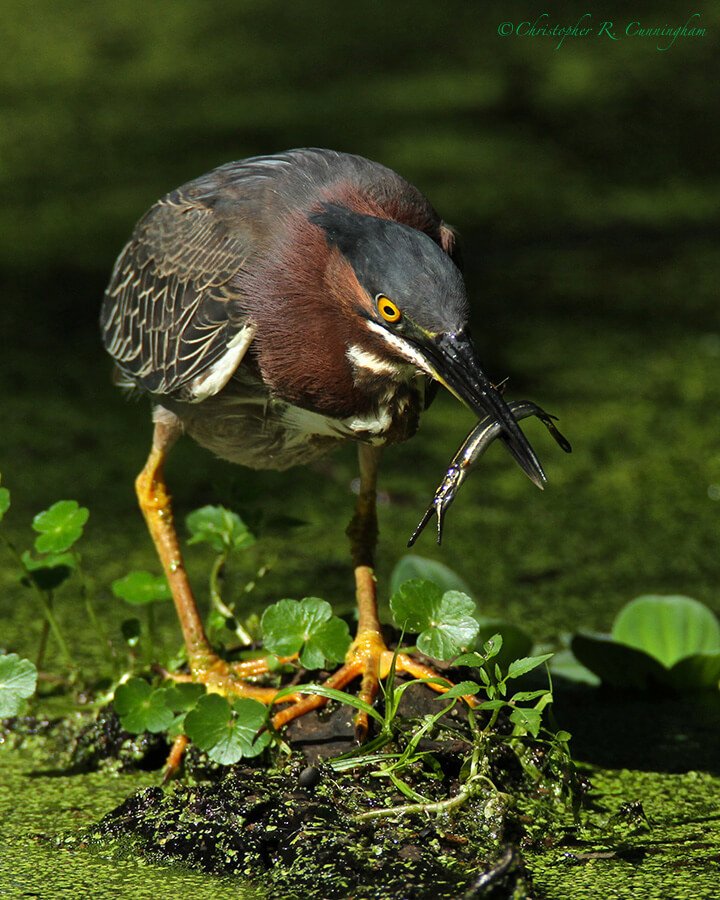
Green Heron with gar fingerling, Pilant Lake, Brazos Bend State Park, Texas
Green Heron (Transitioning into Full Breeding Plumage) with Gar Fingerling, Pilant Lake, Brazos Bend State Park, Texas. Canon EOS 7D/600mm f/4L IS (+1.4x TC). Natural light.

The second bird (above) had blueish lores that still showed an upper outline of yellowish green. The feet and legs were still the predominately blotchy yellow-black of nonbreeding, but patches of orange had formed. The lower bill retained a stripe of yellowish green along the lower margin. I think that this bird had just started courtship behavior.

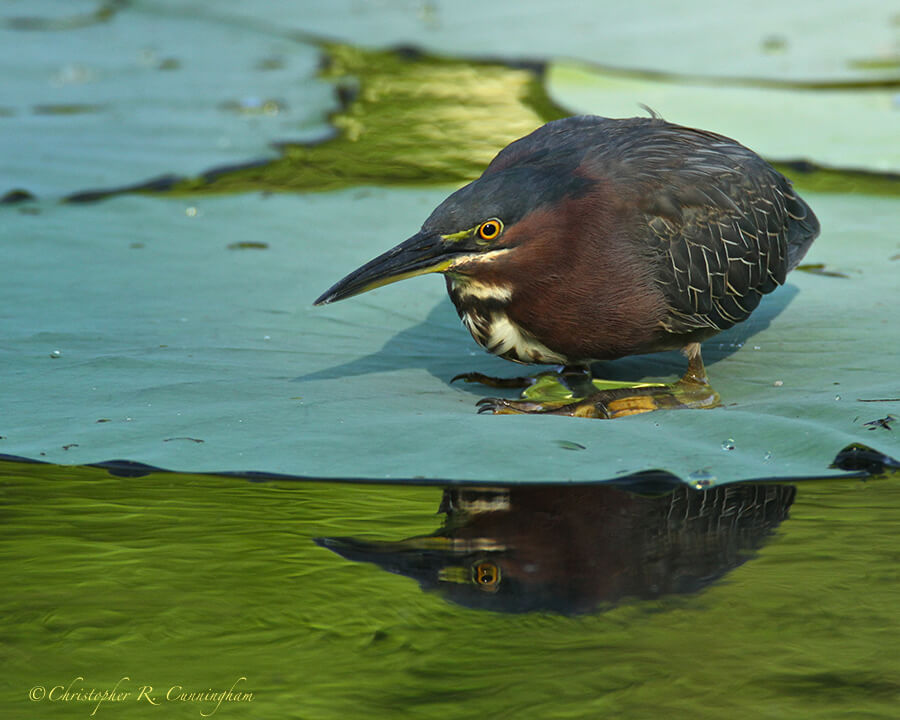
The image below shows an adult Green Heron in nonbreeding colors during late summer. Note the stripe of greenish yellow above the lore and along the lower margin of the mandible. This is how I typically see Green Herons, which is why it’s so exciting to see them in their flamboyant, transitory breeding colors.

Green Heron in Nonbreeding Plumage on American Lotus Leaf, Elm Lake, Brazos Bend State Park, Texas
Green Heron in Nonbreeding Plumage on an American Lotus Leaf, Elm Lake, Brazos Bend State Park, Texas. This bird was snatching small fish from near the surface of the water while remaining hidden from below on the leaf. Image taken in late August. Canon EOS 7D/600mm f/4L IS (+1.4x TC). High-speed synchronized fill-flash.

Essentially what photography is is life lit up.—Sam Abell

©2015 Christopher R. Cunningham. All rights reserved. No text or images may be duplicated or distributed without permission.