Birds in “Good” and “Bad” Light

There is nothing either good or bad but thinking makes it so. –William Shakespeare
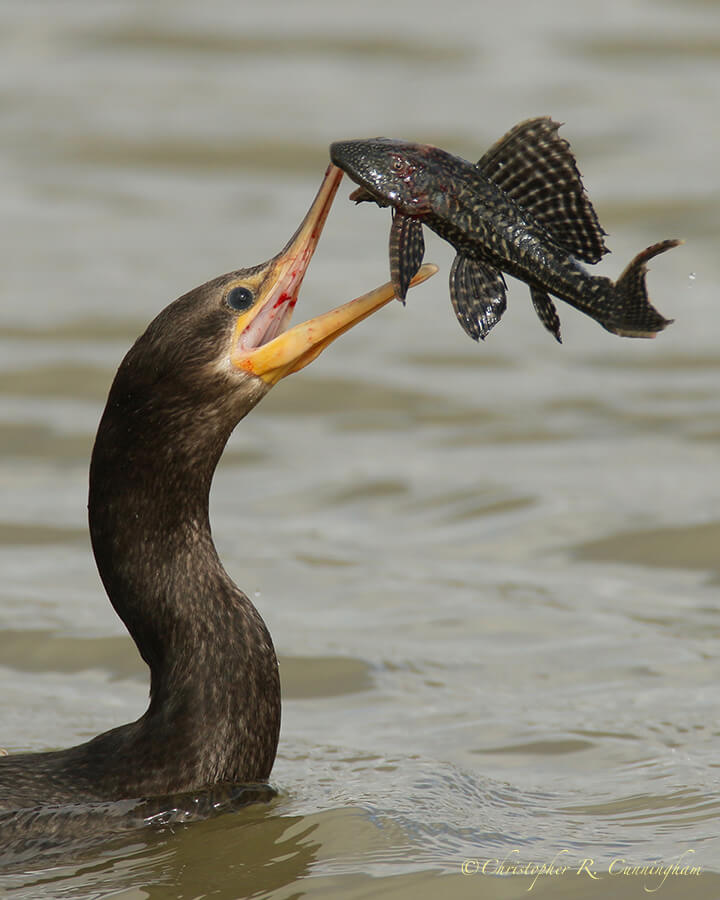
Double-crested Cormorant with Plecostomus, Fiorenza Park, Houston
Double-crested Cormorant with “Plecostomus,” Fiorenza Park, Houston, Texas. We Texans may be horrified by the proliferation of these South American armored catfish in our waters, but to cormorants that range far to the south, it still feels like home when they’re around. Canon EOS 7DII/600mm f/4L IS (+1.4x TC). Natural light.

l know there is a great diversity of opinion on this subject, but my favorite kind of Texas photo-birding day is the day after a strong blue norther. The howling winds have died down, and the 40º sky is clear, but for a thin haze of cirrus clouds. This kind of day has been in very short supply for several years now.
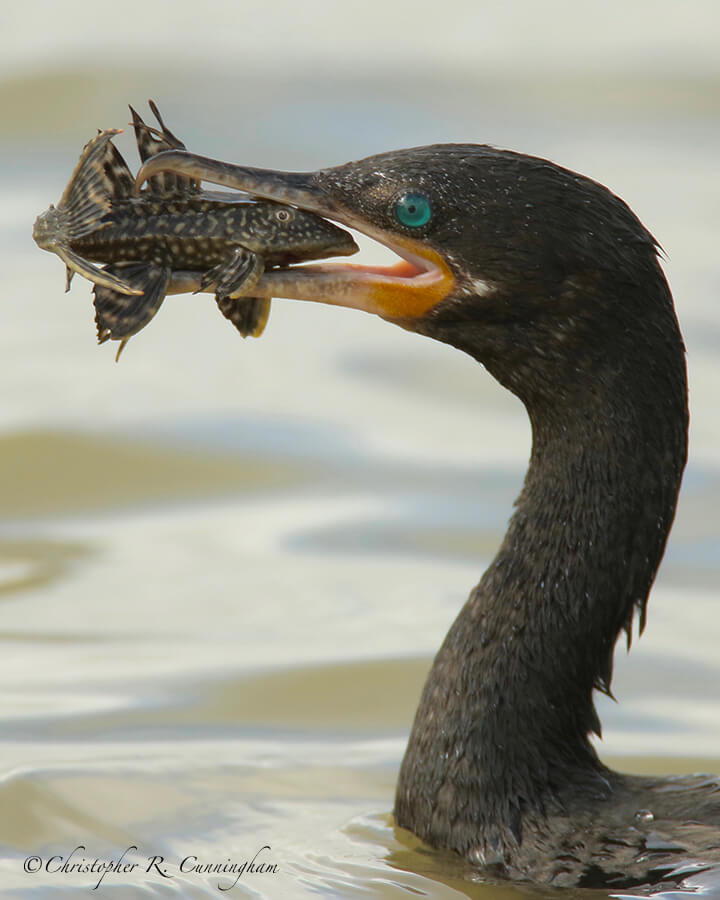
Neotropic Cormorant with Plecostomus, Fiorenza Park, Houston, Texas
Eye to Eye: Neotropic Cormorant with “Plecostomus,” Fiorenza Park, Houston, Texas. In this shot, the sun was in the wrong position (or rather I was), leading to too much glare from the water and a backlit bird. Canon EOS 7DII/600mm f/4L IS (+1.4x TC). Natural light.

Lately the weather has been wildly variable, with clear, cold days rare. This has meant having to make the most of a wide variety of lighting situations. The two cormorant shots above were taken under what I consider to be “bad” conditions. The sky was mostly cloudy with sunbreaks every few minutes leading to having to constantly chimp settings. When the sun emerged, it produced a blinding, muddy-yellow glare off the water’s surface. Because the fishing behavior documented was happening all around me, the sun was sometimes behind and sometimes ahead—making for an exciting morning of work!
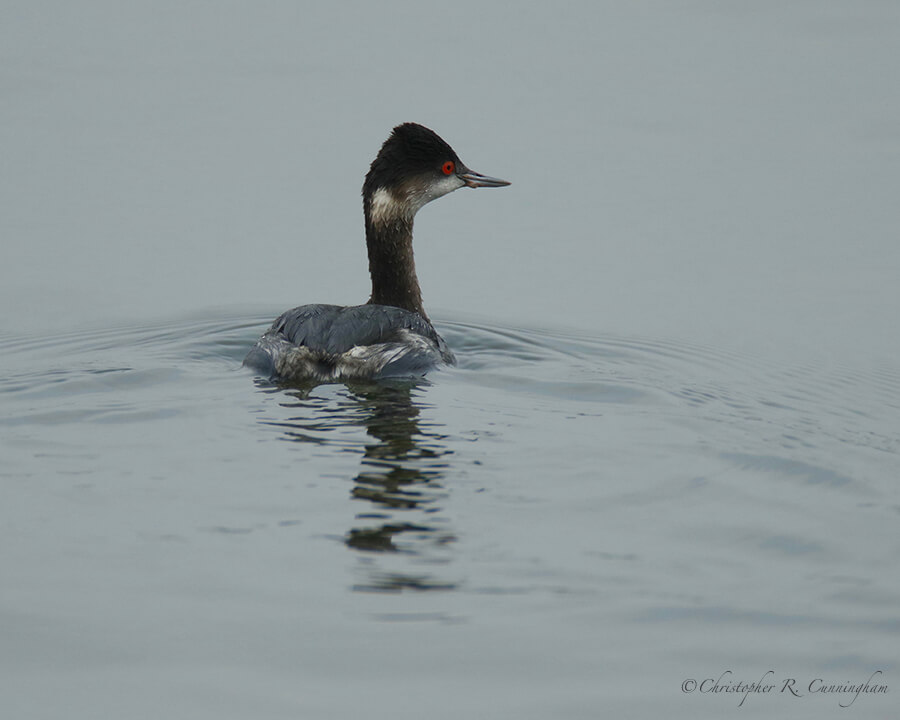
Eared Grebe, Offatt's Bayou, Galveston Island, Texas
Ad Noctem: An Eared Grebe Paddles off into the Fog, Offatt’s Bayou, Galveston Island, Texas. I like the way the wake ends at a veil of fog. Canon EOS 7DII/600mm f/4L IS (+1.4x TC). Natural light.
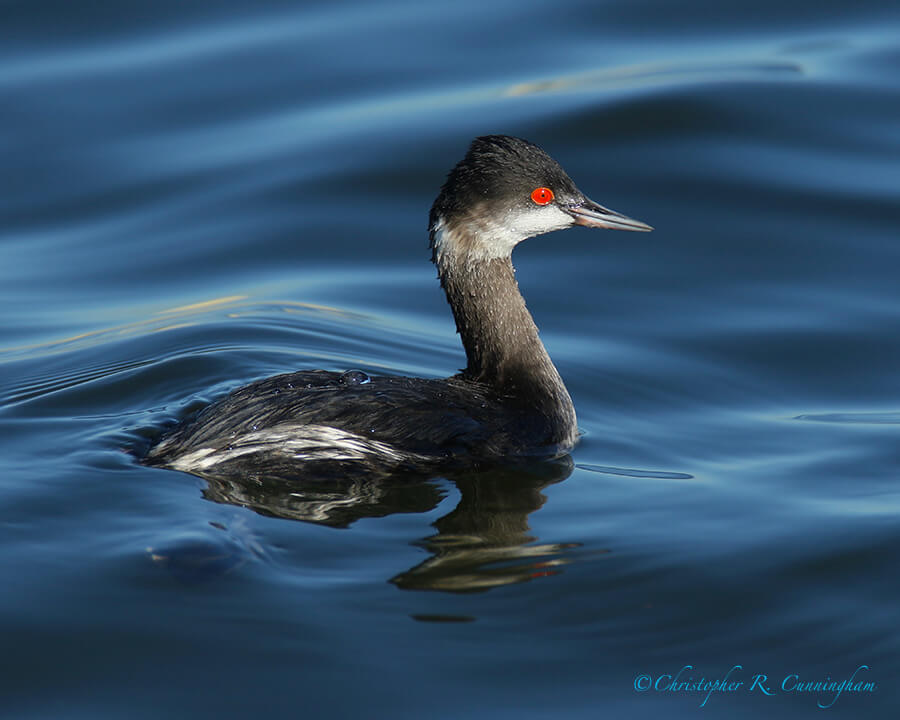
Eared Grebe, Offatt's Bayou, Galveston Island, Texas
Eared Grebe, Offatt’s Bayou, Galveston Island, Texas. Perfect light, but not perfect perspective. Canon EOS 7DII/600mm f/4L IS (+1.4x TC). Natural light.

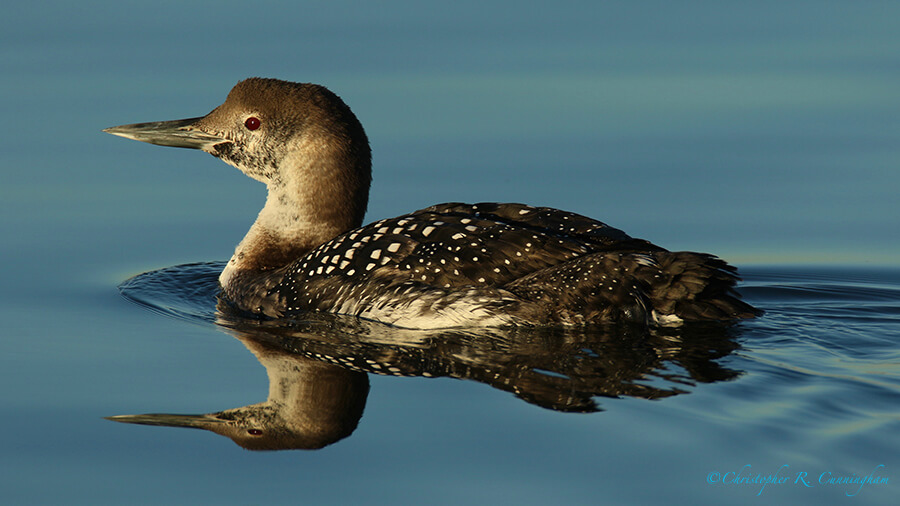
Two recent visits to Offatt’s Bayou occurred during very different optical conditions. The upper grebe and loon immediately below were shot on a gloomy, gray, foggy morning. And the lower grebe and loon were shot on the same glorious, clear, bright morning about a week later at the same place.

This shooting locale (where 61st crosses Offfatt’s Bayou) has only recently become accessible again. Where rickety old docks used to stand, there is now a large raised cement viewing/fishing platform. The problem with the new platform is that it is too high, leading to an extreme shooting angle. The old situation was actually better, assuming you were willing to risk falling into the drink to get the shot. Alas, there’s really nothing to be done about the angle now—except to try and capture some interesting wave forms, colors, reflections, or textures from the surface of the water. Sometimes you have to take what you can get! Progress!
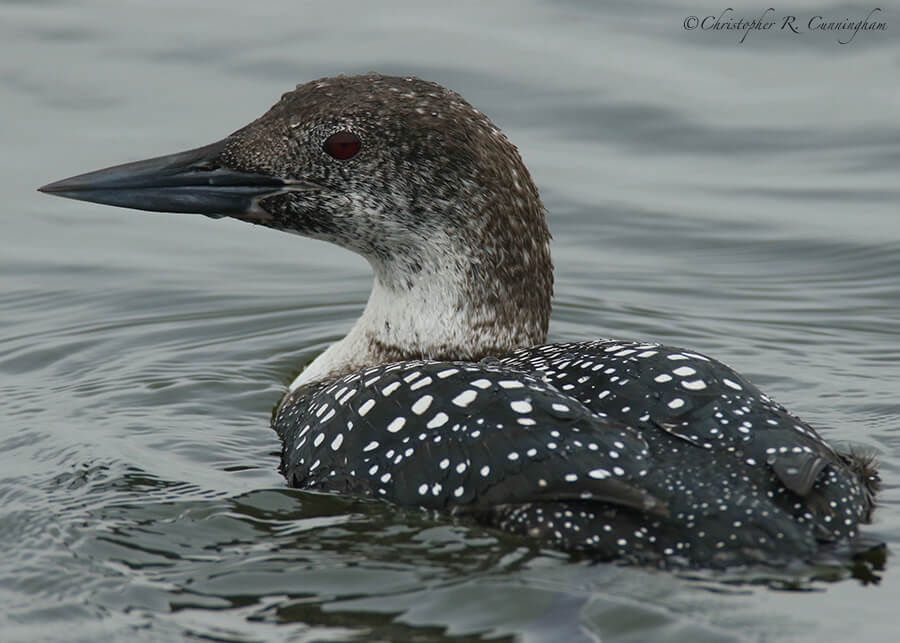
Common Loon, Offatt's Bayou, Galveston Island, Texas
Made in the Shade: Common Loon, Offatt’s Bayou, Galveston Island, Texas. It looks like this bird is swimming in mercury. Canon EOS 7DII/600mm f/4L IS (+1.4x TC). Natural light.
Common Loon, Offatt's Bayou, Galveston Island, Texas
Transitional Common Loon, Offatt’s Bayou, Galveston Island, Texas. Images from this locale tend to look better from a bit of a distance, given the raised nature of the observation platform. Canon EOS 7DII/600mm f/4L IS (+1.4x TC). Natural light.

©2017 Christopher R. Cunningham. All rights reserved. No text or images may be duplicated or distributed without permission.
Cooperative Feeding in American White Pelicans

Birds are the most popular group in the animal kingdom. We feed them and tame them and think we know them. And yet they inhabit a world which is really rather mysterious. –David Attenborough

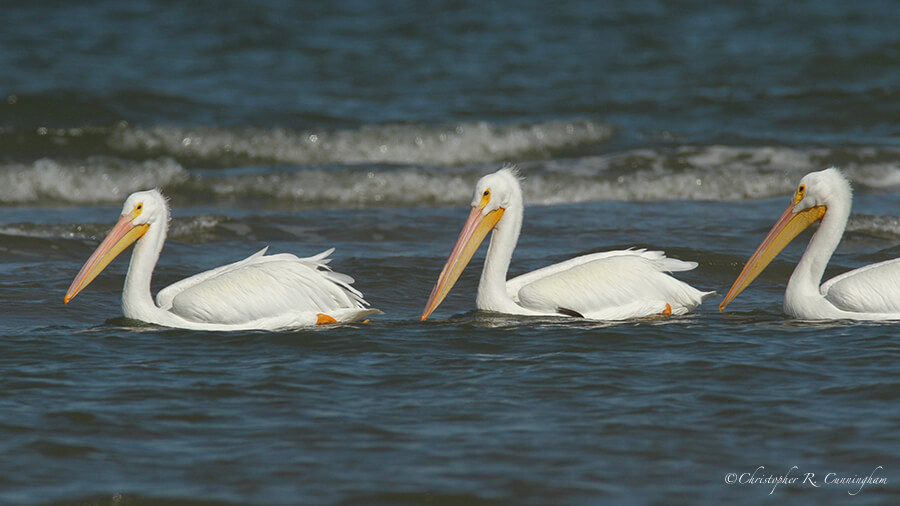
Line of American White Pelicans, East Beach, Galveston Island, Texas
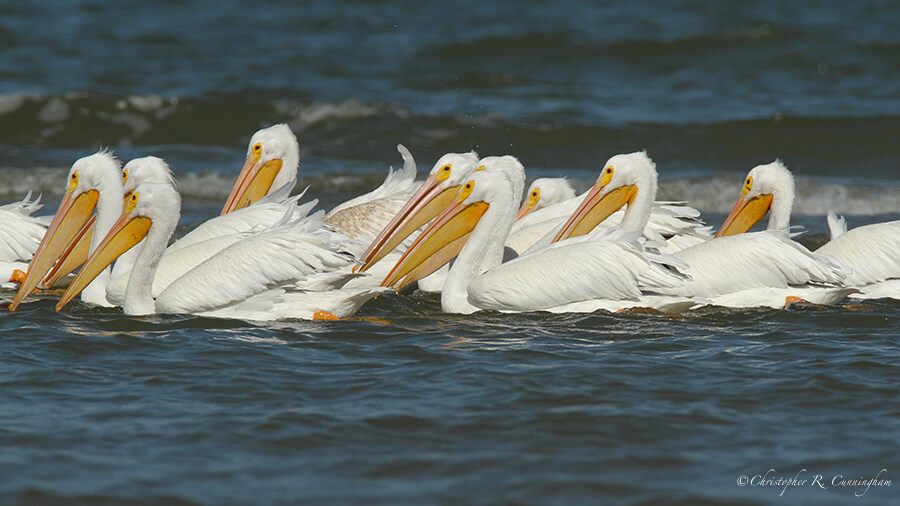
Line of American White Pelicans, East Beach, Galveston Island, Texas. Canon EOS 7D/600mm f/4L IS (+1.4x TC). Natural light.

Frankly we haven’t gotten out much lately. This is a function of terrible weather and just plain exhaustion. The prospect of fighting traffic on a gloomly, humid 85° day in February hasn’t held much charm. Spending time indoors has led to combing through the photo archives and pining for past years in which we had a proper winter.

One of the things we would have been watching for this week, had we been outdoors, is the cooperative feeding behavior of American White Pelicans. Whenever I see these birds I stand in awe, just waiting for them to so something neat. Is there anything more majestic in American birding than a string of White Pelicans paddling in formation along the shallows searching for schools of fish?

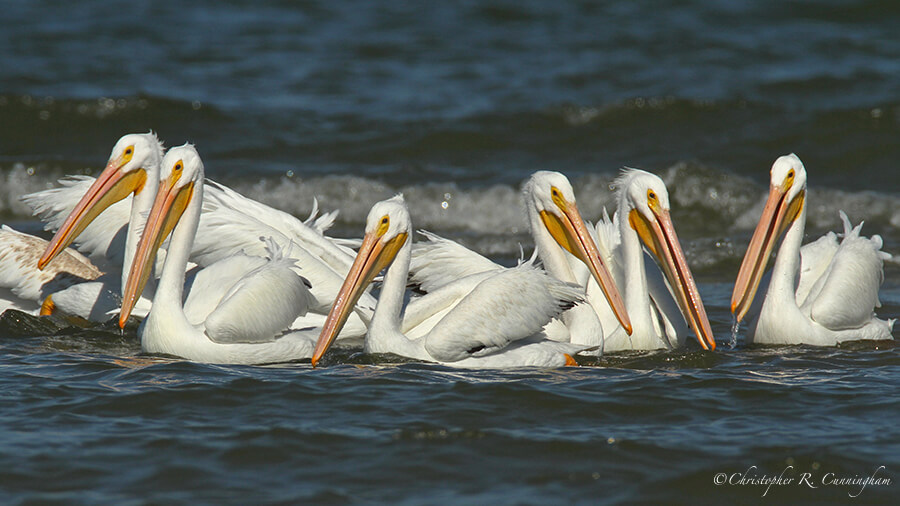
American White Pelican Feeding Frenzy, East Beach, Galveston Island, Texas
American White Pelican Feeding Frenzy, East Beach, Galveston Island, Texas. Canon EOS 7D/600mm f/4L IS (+1.4x TC). Natural light.

American White Pelicans are known to cooperatively herd fish into the shallows by beating their wings. On Galveston, a fairly common sight is a line of White Pelicans suddenly forming a circle, beaks pointed inward, and gobbling up a school of fish (presumably).

Pelican Phalanx, East Beach, Galveston Island, Texas
Pelican Phalanx, East Beach, Galveston Island, Texas. Canon EOS 7D/600mm f/4L IS (+1.4x TC). Natural light.

Once the feeding frenzy is over, the birds turn around within their circular formation and reassemble into their line and continue paddling along peacefully . . . until the next school of fish.

After fishing, East Beach, Galveston Island, Texas
Back in Line, East Beach, Galveston Island, Texas. Canon EOS 7D/600mm f/4L IS (+1.4x TC). Natural light.

©2017 Christopher R. Cunningham. All rights reserved. No text or images may be duplicated or distributed without permission.
The Rosy-Finches of Sandia Crest

It might well be that getting used to things up here was simply a matter of getting used to not getting used to them—but . . . .
―Thomas Mann, The Magic Mountain

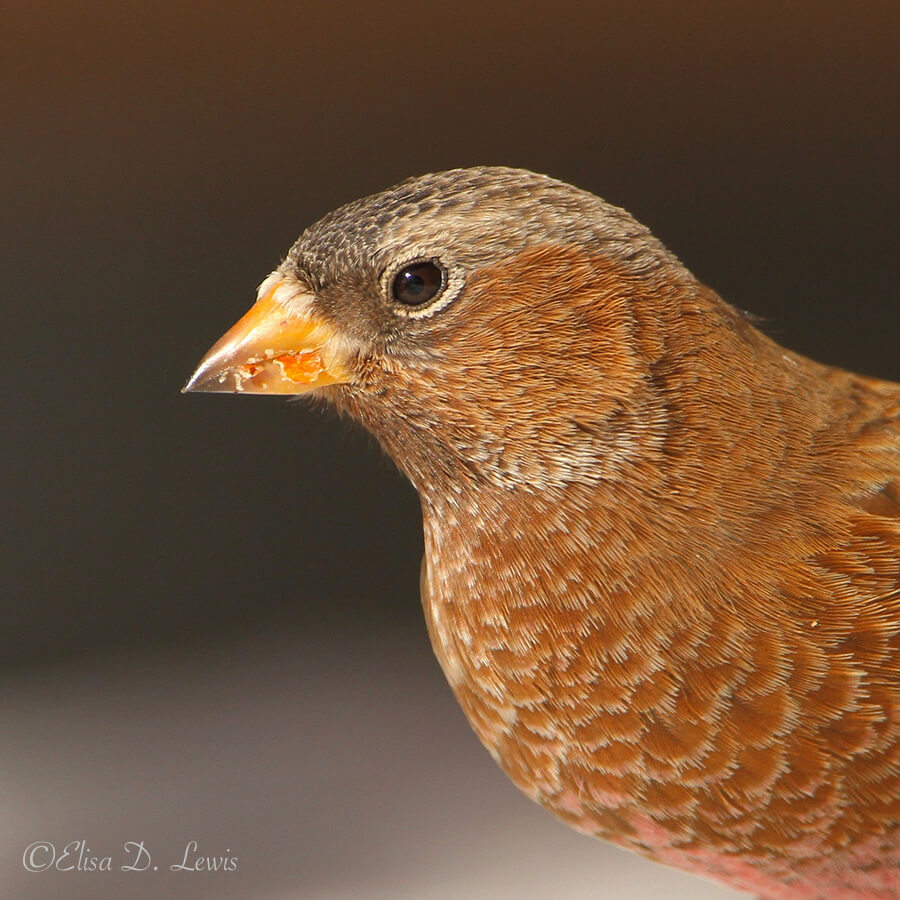
Portrait: Brown-capped Rosy-Finch, Sandia Crest, New Mexico
Portrait: Brown-capped Rosy-Finch, Sandia Crest, New Mexico. All the Rosy-Finches have lovely rose-fringed feathers. Canon EOS 7D/500mm f/4L IS (+1.4x TC). Natural light.

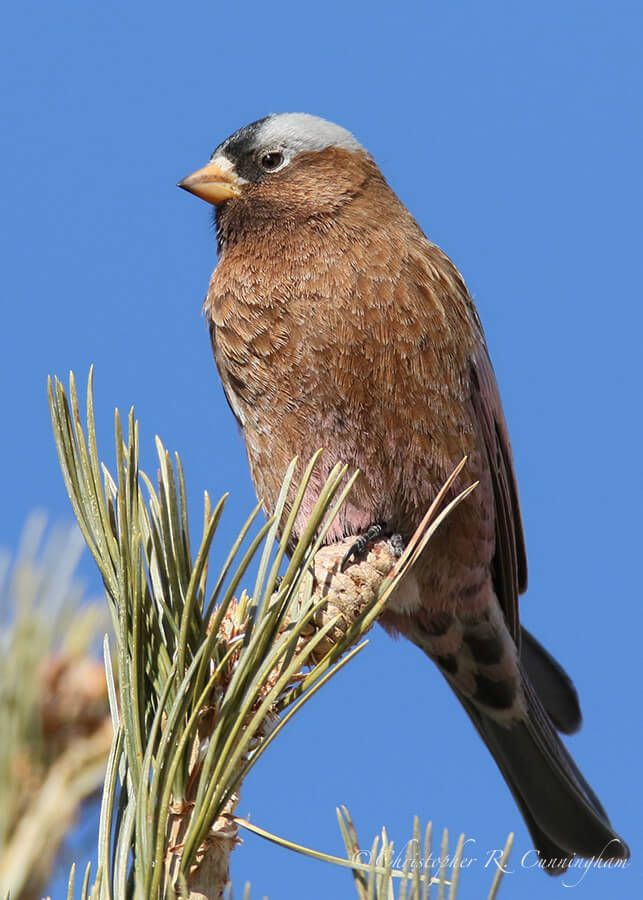
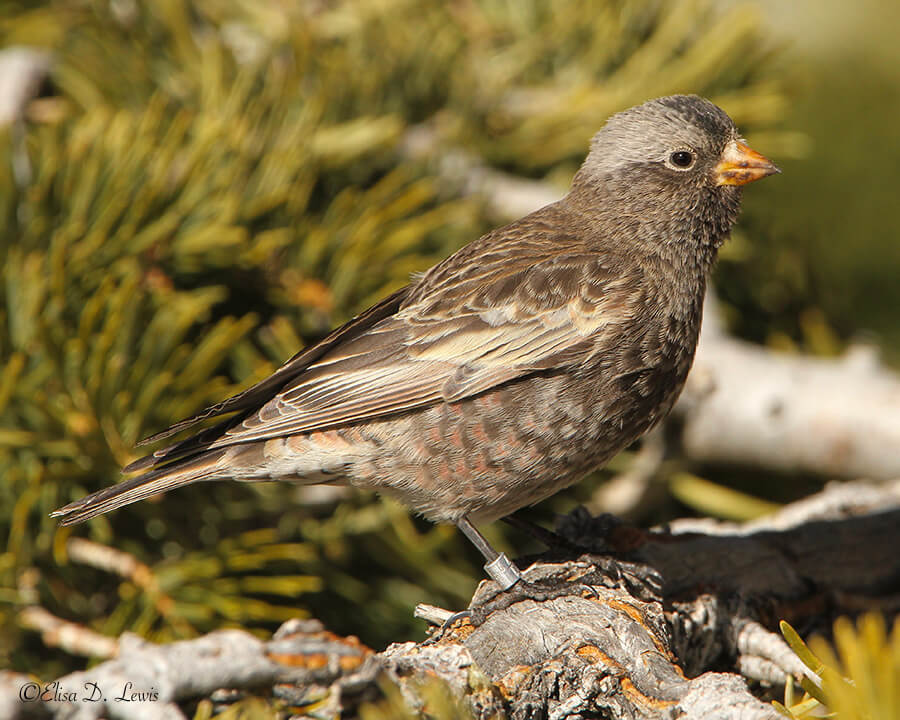
Given their alpine habits, shy ways, and (generally) restricted geographic ranges, the Rosy-Finches are among the hardest birds in North America to see. The Brown-capped Rosy-Finch has the most restricted range of the the three species that occur in the U.S. and can only be seen in southern Wyoming, central Colorado, and northern New Mexico. In warmer weather, it tends to occur only at high elevation, but descends in winter. The Black Rosy-Finch has a larger, but sill relatively restricted range within the western interior of the U.S. The Gray-crowned Rosy-Finch has the widest distribution of the three species and ranges from northern New Mexico up through western Canada and Alaska, and across the Bering Strait into eastern Asia. All birds tend to be ground foragers for insects and seeds, which are often collected from the surface of snow. According to stateofthebirds.org, the Black and Brown-capped Rosy-Finches are of high conservation concern, and the Gray-crowned is of high moderate concern.

Gray-crowned Rosy-Finch, Sandia Crest, New Mexico
Gray-crowned Rosy-Finch, Sandia Crest, New Mexico. Canon EOS 7DII/600mm f/4L IS (+1.4x TC). Natural light.

Sandia Crest, a snowy mountain-top about an hour drive east of Albuquerque, is an unusual place where all three species can be seen together in small flocks during winter. A gift shop and restaurant can be found on the crest at an elevation of about 10,600 feet. Getting up the icy, winding road to the top can be a bit hairy but well worth the anxiety . . . .

And now the hard part . . . feeders on the observation platform attract the birds which typically come and go throughout the day. The nature photographers in us struggle against this idea of seeking and photographing birds baited to a place. But as birds become rarer and rarer, and time and resources are so limited . . . .

Other alpine birds like Pine Grosbeaks and Red Crossbills can also (theoretically) be seen at Sandia Crest, but we were not lucky in this regard. In addition to the Rosy-finches we saw only Stellar’s Jays, White-crowned Sparrows, and Dark-eyed Juncos.

New Mexico is one of our favorite states to visit. Perhaps it has something to do with the romance of the prehistoric past. Some of the earliest North American cultures are named after places in New Mexico: Folsom, Clovis, and Sandia. Perhaps it is this state’s important role in the history of aerospace and nuclear technology, White Sands, Trinity . . . .  To these attractions we can add a number first-rate birding sites like Sandia Crest, San Bernardo and Bosque del Apache NWR. We already have a return visit planned.

Black Rosy-Finch, Sandia Crest, New Mexico
Black Rosy-Finch, Sandia Crest, New Mexico. Canon EOS 7D/500mm f/4L IS (+1.4x TC). Natural light.

©2017 Elisa D. Lewis and Christopher R. Cunningham. All rights reserved. No text or images may be duplicated or distributed without permission.
Two Shutterbirds Uncensored

Beauty in art is often nothing but ugliness subdued.—Jean Rostand

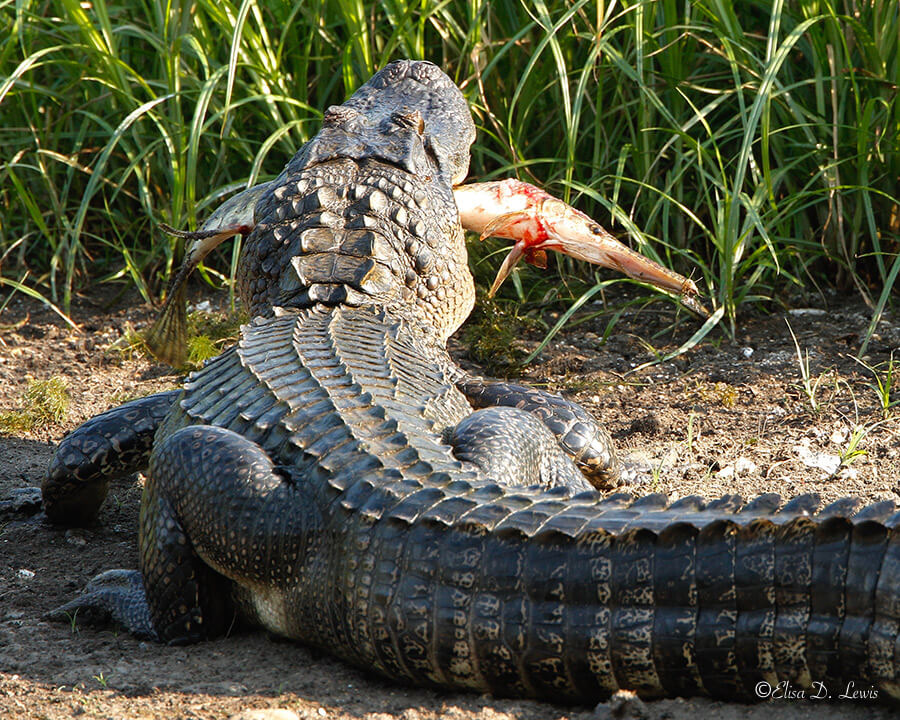
Alligator with gar, Elm Lake, Brazos Bend State Park, Texas
Red in Tooth and Claw: Alligator with Gar, Elm Lake, Brazos Bend State Park, Texas. Canon EOS 7D/500mm f/4L IS (+1.4x TC). Natural light.

Some of the most memorable photographs in history are unflinching documents of the brutality of the world. Think of Matthew Brady’s images of the American Civil War, or Robert Capa’s slightly mis-framed, slightly out-of-focus photo of a falling soldier, shot dead during the Spanish Civil War (Loyalist Militiaman at the Moment of Death, 1936). And who can ever forget Nick Ut’s image of a napalm-burned Vietnamese girl running screaming down a road surrounded by scattered refugees and soldiers?

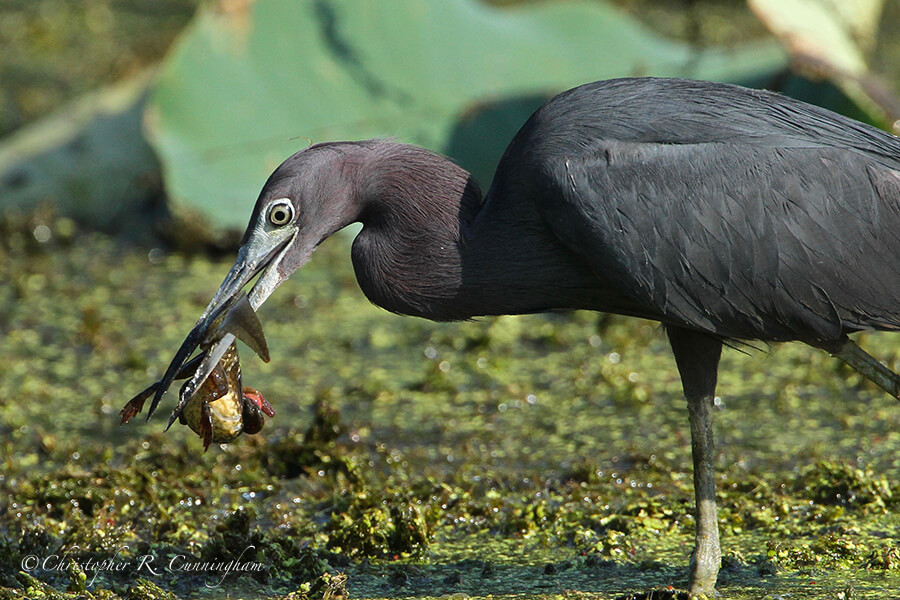
Little Blue Heron with Tadpole, Pilant Lake, Brazos Bend State Park, Texas
Little Blue Heron with Tadpole, Pilant Lake, Brazos Bend State Park, Texas. Despite the fact that many images of waders hunting amphibians depict clean “takes,” the process of spearing and eating a frog is usually a messy business. Canon EOS 7D/500mm f/4L IS (+1.4x TC). Natural light.

Nature, like war, offers up some dark and grisly images. As one who is interested in photographing birds, especially waders, in the act of hunting, I often witness and document violent and bloody scenes. Waders, after all, are stone-cold killers. If a sequence of images is taken, a few images are usually relatively tame–the ones I present to friends, or in talks–or on this site. Often, there are others, typically not shared, with jets of blood and streamers of entrails. Is it not right to share these images, too?

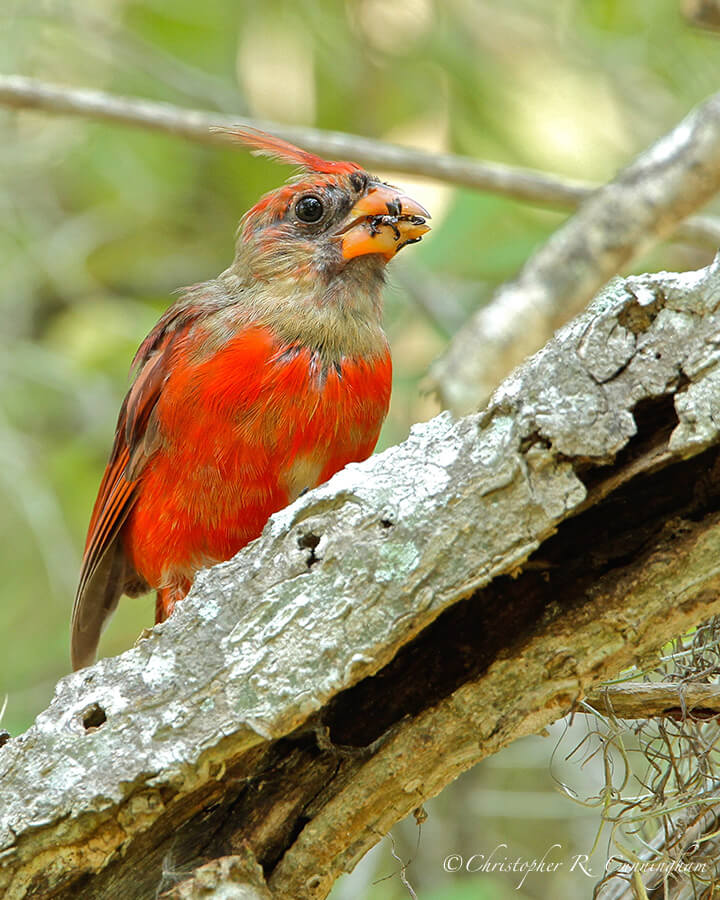
Molting Northern Cardinal with Weevil, near Elm Lake, Brazos Bend State Park, Texas
Molting Northern Cardinal with Large Mashed Weevil, near Elm Lake, Brazos Bend State Park, Texas. This bird made a real mess of a great big black weevil. Canon EOS 7D/500mm f/4L IS (+1.4x TC). Natural light.

Similarly, photographers tend to avoid birds in molt or with injuries, diseases, and deformities. But the more time one spends in the field, the more of these not-so-pretty pictures of nature emerge. Of course, these images may have value as documents of the current state of affairs in a particular place or the world in general.

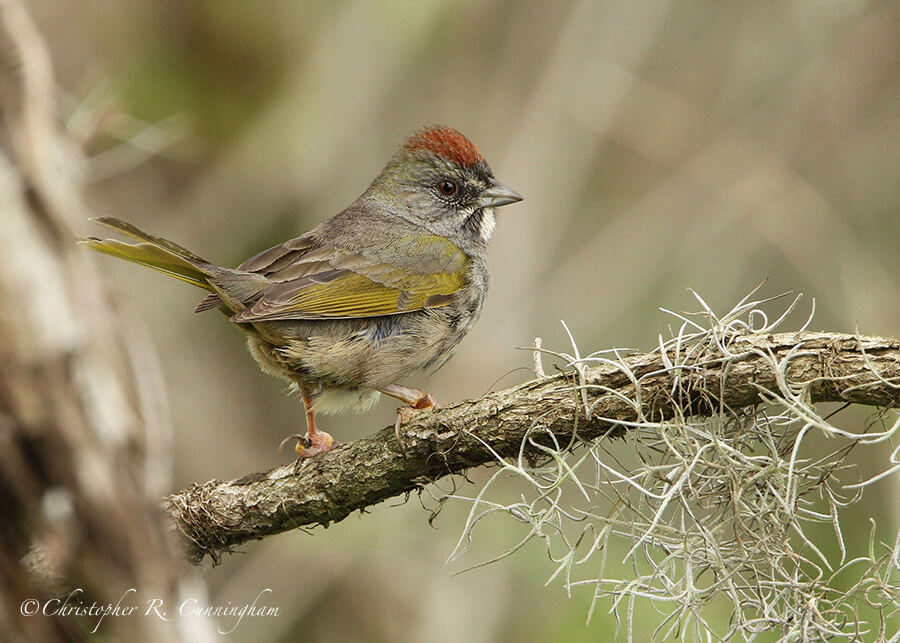
Green-tailed Towhee with Bumblefoot(?), Pilant Lake, Brazos Bend State Park, Texas
Green-tailed Towhee with Bumblefoot(?), Pilant Lake, Brazos Bend State Park, Texas. A beautiful sparrow miles outside its range, this bird appears to have, sadly, bacterially-infected feet. There is a story here. Canon EOS 7D/500mm f/4L IS (+1.4x TC). Natural light.

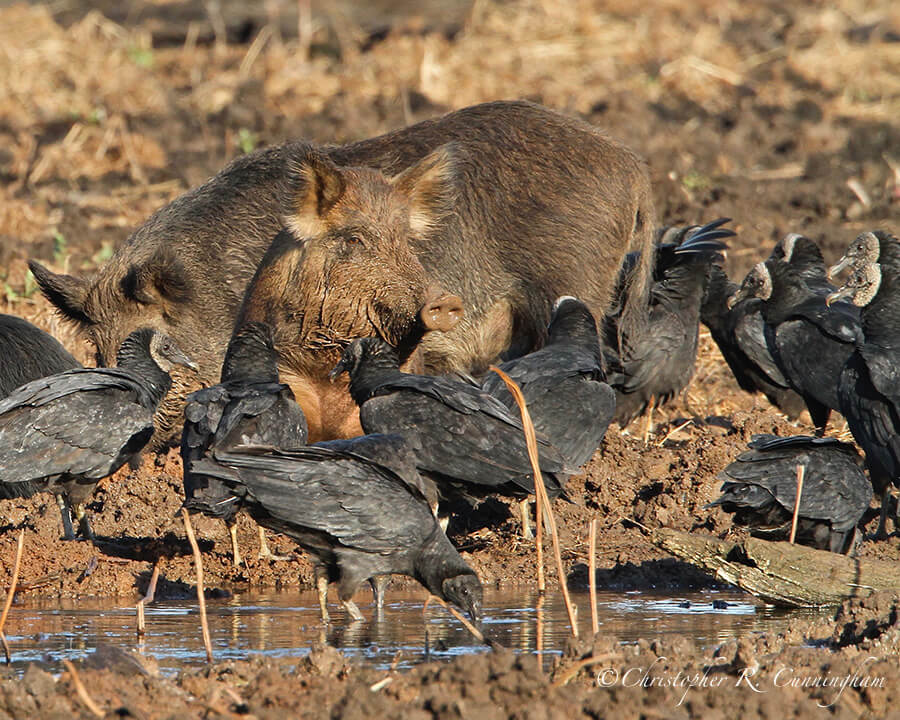
And where nature photographers should document unflinchingly is where they observe the continued degradation and destruction of nature at the hand of man, whether through direct action or through the actions of human-introduced species. Who knows, it may make a difference.

Black Vultures with Feral Hogs, Elm Lake, Brazos Bend State Park, Texas
Black Vultures with Feral Hogs, Elm Lake, Brazos Bend State Park, Texas. Feral hogs are rooting invasives introduced by humans. They wreak havoc wherever they go. Exhibit A: Here stands a nasty mud-wallow where once stood a charming little island. Canon EOS 7D/500mm f/4L IS (+1.4x TC). Natural light.

©2017 Christopher R. Cunningham and Elisa D. Lewis. All rights reserved. No text or images may be duplicated or distributed without permission.